

5 Series wall ovens
VSOE single and VDOE double electric ovens with TruConvec convection.
Viking service · Chula Vista
Same-day Viking oven repair in Chula Vista, Mon–Sat 7 AM–6 PM. $99 service call, credited to the repair. 3-month labor / 1-year parts warranty. Licensed (A51423) and insured up to $1M. Family-owned and run by Viktor, owner and lead technician. Rated 5.0★ from 490 Google reviews. Call (619) 877-6701.
$99 service call, credited · Same-day service Mon–Sat · Approval before work · License A51423 · EPA-certified technicians · Insured up to $1M
The diagnostic fee is non-refundable and credited toward the total repair cost when you proceed.
Commercial service visits are priced separately at $150.
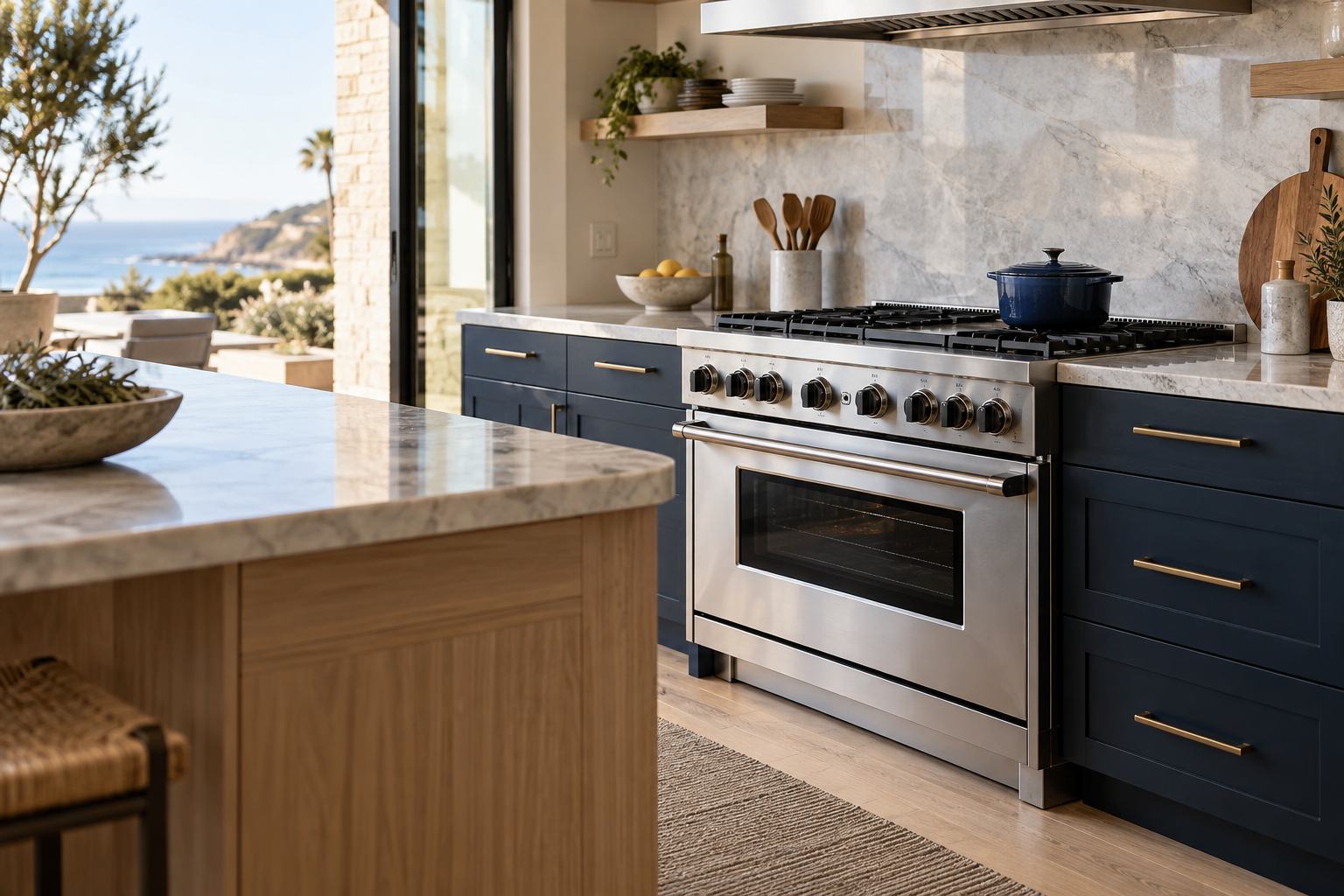
Viking wall ovens
Viking electric wall ovens run an electronic control whose F-codes are documented in the brand's own service manuals - door latch, sensor, cooling fan, probe and board communication each have a number. The code on the display is the visit's first instruction, so photograph it before any reset.
A photo of the model label and the complete installation helps the team understand the configuration before the visit.
VSOE single and VDOE double electric ovens with TruConvec convection.
The accessible electric wall oven line on shared control logic.
The Tuscany-inflected flagship ovens - their own trim, shared philosophy.
Designer-era single ovens whose service manual documents the F-code table.
Start with the symptom
A symptom narrows the inspection; it does not identify the failed component. The $99 visit confirms the actual fault on the exact model before any repair is authorized.
Elements, relays and sensor tested in order - codes are a head start, not a requirement.
The F01 pattern - latch motor and switches, never force.
RTD calibration against a reference thermometer - drift is measurable.
TruConvec fan and motor - distinct from the cooling fan.
Latch, thermal cutout and door seal - the documented trio.
Power path and control board - photograph, then one power cycle.
Series and model numbers
One electronic-control philosophy across generations - the model prefix and serial decide the exact board and latch hardware, the F-code decides where the visit starts.
Model label
The data plate is on the oven cell frame, visible when the door is open - typically along the left side or bottom of the frame. Photograph it with the door fully open. Photograph the complete label — the full model and serial identify parts and production year better than the series name alone.
Indicators and alerts
For any message not shown, use the manual for the exact model rather than a generic list.
Viking diagnostics
The F-code table above comes from Viking's own service manuals for the electronic oven control platform. Meanings circulating online that conflict with the service literature are excluded.
Preventive service and owner care
Alpha Pro provides preventive and general maintenance for Viking wall ovens. The appliance design determines which procedures are accessible and appropriate.
Owner maintenance
Professional maintenance
A professional visit can evaluate accessible systems without assuming every procedure applies to every model.
Diagnosis before parts
Call or book with the model label, exact behavior, any displayed codes, photos, and access notes.
The technician examines the reported condition in context: preheat behavior, temperatures, elements, door fit, controls, and relevant components.
Findings and proposed work are explained before repair proceeds. The residential diagnostic is credited toward an approved repair.
Service area and operating context
From established west-side streets to Otay Ranch's new communities, Chula Vista runs every appliance generation - big families, big laundry loads and builder suites hitting their first repairs.
South Bay and East County bring summer heat, hard water and hard-working family appliances - practical repairs with strong parts availability are the local priority.
During maintenance, accessible metal surfaces can be inspected for corrosion, moisture exposure, or conditions that may warrant attention. Location alone does not establish the cause of a failure.
A better repair decision
There is no honest universal age or price threshold. Start with the exact model and a diagnosis.
Local notes · Chula Vista
Chula Vista kitchens cook for a crowd. Households average about 3.1 people, and a Viking wall oven in a busy home bakes, broils and roasts far more hours a year than one in a quiet condo. That use wears out bake and broil elements, convection fan motors and the temperature sensor that controls them all. About a third of the city's homes were built in 2000 or later, many in Eastlake and Otay Ranch, so built-in ovens from that wave are now well out of warranty. We repair them across the city.
Oven parts wear by the hour. Every preheat cycles the bake element from cold to glowing, and every convection bake spins the fan motor's bearings. In large Chula Vista households, where meals are cooked for three or more nearly every day, those hours add up quickly. So do holiday roasts and weekend baking. Much of the east side was built in waves, from Eastlake in 1986 and Rancho del Rey in 1989 to Otay Ranch from 1999, and newer stock makes up about 34 percent of the city. Built-ins installed in those years are reaching the age when elements and fans give out. Weather matters too. The western, bayside city stays mild, with an August mean high near 77°F, but September averages a monthly maximum of 92.4°F and has reached 103°F. A wall oven sits in tight cabinetry and depends on its cooling fan to keep the control board cool. On a hot day with the oven running, a weak cooling fan lets heat build around the electronics. Near the bay, humid, salty air can also corrode element terminals over time.
Symptom: Slow preheat, pale tops, or no heat on bake while broil still works. Cause: Heavy daily cycling from cold to glowing wears the element until it blisters or splits. Fix: We continuity-test and replace the element and check its terminals for burn or corrosion.
Symptom: A loud whir or grind, a dead convection fan, or a control panel that feels hot. Cause: Motor bearings wear out with long cooking hours. Fix: We replace the fan motor. A failed cooling fan is urgent, because it protects the control board from heat.
Symptom: F1 or F2 appears, or the oven overshoots and burns food. Cause: An open or shorted RTD probe or damaged sensor wiring behind the cavity. Fix: We measure the RTD at the control and replace the probe or harness, then verify the oven holds its set temperature.
Symptom: The door will not unlock after cleaning, or the clean cycle will not start. Cause: A latch motor or latch switch failure, often after many clean cycles. Fix: We cool and reset the oven, test the latch motor and switches, and replace the assembly if either has failed.
Clean spills soon after they cool, so self-clean is needed less often. When you do run it, wipe up heavy grease first and never schedule back-to-back cycles. Listen to the fans. A convection or cooling fan that starts to whine is easier and cheaper to replace before it seizes. Check the door gasket yearly; a torn gasket wastes heat and bakes unevenly. On very hot September days, avoid starting a self-clean when the kitchen is already warm, since the board is already running near its limit.
On the east side, many neighborhoods have gated entries or HOA rules; send the entry details when you book. Western neighborhoods are usually easy for parking. The technician reads any code, tests the elements, measures the sensor, checks the latch and runs the fans, then gives you a quote before starting work. Have the model and serial number ready, note which mode fails and which cavity on a double oven, and send a photo of any code. If the oven tripped a breaker, tell us that too, since it points toward an element or wiring fault.
Elements, sensors, latches and fan motors are the common repairs on ovens from the 2000s and usually cost much less than replacement. Built-in cutouts vary, so a new oven may also need cabinet changes. A control board failure on an older model with a discontinued part is the case where replacement becomes the sensible option. The $99 diagnostic is credited toward the repair.
Helpful answers
Clear preparation makes a service request easier to evaluate.
Yes - same-day windows are offered across San Diego County subject to the day's schedule. Availability is confirmed for the exact address when you book.
We take requests across Chula Vista (ZIP 91910, 91911, 91913-91915). Share gate codes, parking or building access when booking so the technician can plan the visit.
Yes. It is non-refundable and credited toward the total repair cost if you proceed. There are no residential exceptions.
A 90-day labor warranty and a 1-year parts warranty, both starting on the date the repair is completed.
No. A symptom narrows the search, but the diagnostic visit on the exact model confirms the actual fault before any repair is authorized.
The door latch is not where the control expects it - common during or after self-clean. The latch assembly is tested and repaired; do not force the door in the meantime.
Pyrolytic heat stresses the thermal safety and latch - a documented pattern with documented parts. The visit tests both directly.
The RTD sensor is measurable - drift shows up as a resistance offset, and calibration is verified against a reference during the visit.
On the oven cell frame, visible with the door open - photograph the full plate.
Yes - the DSOE platform is documented in Viking's service literature, and parts are confirmed from the serial.
It can be either. A weak bake element gives slow preheats and pale tops, while a failed convection fan causes hot and cold spots in convection modes. A torn door gasket can also cause uneven results. Testing each part takes a few minutes during the diagnostic.
It can be. Wall ovens rely on a cooling fan to move heat away from the control board. If that fan fails, the board overheats and can be damaged. Stop using self-clean and call us so we can check the fan.
Bake elements and fan motors, because both accumulate hours with every meal. Door latches wear with each self-clean cycle. Sensors fail less often but cause F1 or F2 codes when they do. Catching a noisy fan early is the cheapest save.
Yes. Each cavity has its own element set and sensor, so one side can fail while the other works. Tell us which cavity is affected and which modes fail when you book, so the technician brings the right parts and can often finish in one visit.
Repair and preventive care
Schedule help for an active problem or arrange preventive maintenance for the appliance.
We are ready to help with your appliance repair needs.
Call Us
(619) 877-6701Visits by appointment
11364 Nawa Way,Business Hours
Email Us
Email us