

5 Series wall ovens
VSOE single and VDOE double electric ovens with TruConvec convection.
Viking service · Poway
Same-day Viking oven repair in Poway, Mon–Sat 7 AM–6 PM. $99 service call, credited to the repair. 90-day labor / 1-year parts warranty. Licensed (A51423) and insured up to $1M. Family-owned and run by Viktor, owner and lead technician. Rated 5.0★ from 490 Google reviews. Call (619) 877-6701.
$99 service call, credited · Same-day service Mon–Sat · Approval before work · License A51423 · EPA-certified technicians · Insured up to $1M
The diagnostic fee is non-refundable and credited toward the total repair cost when you proceed.
Commercial service visits are priced separately at $150.
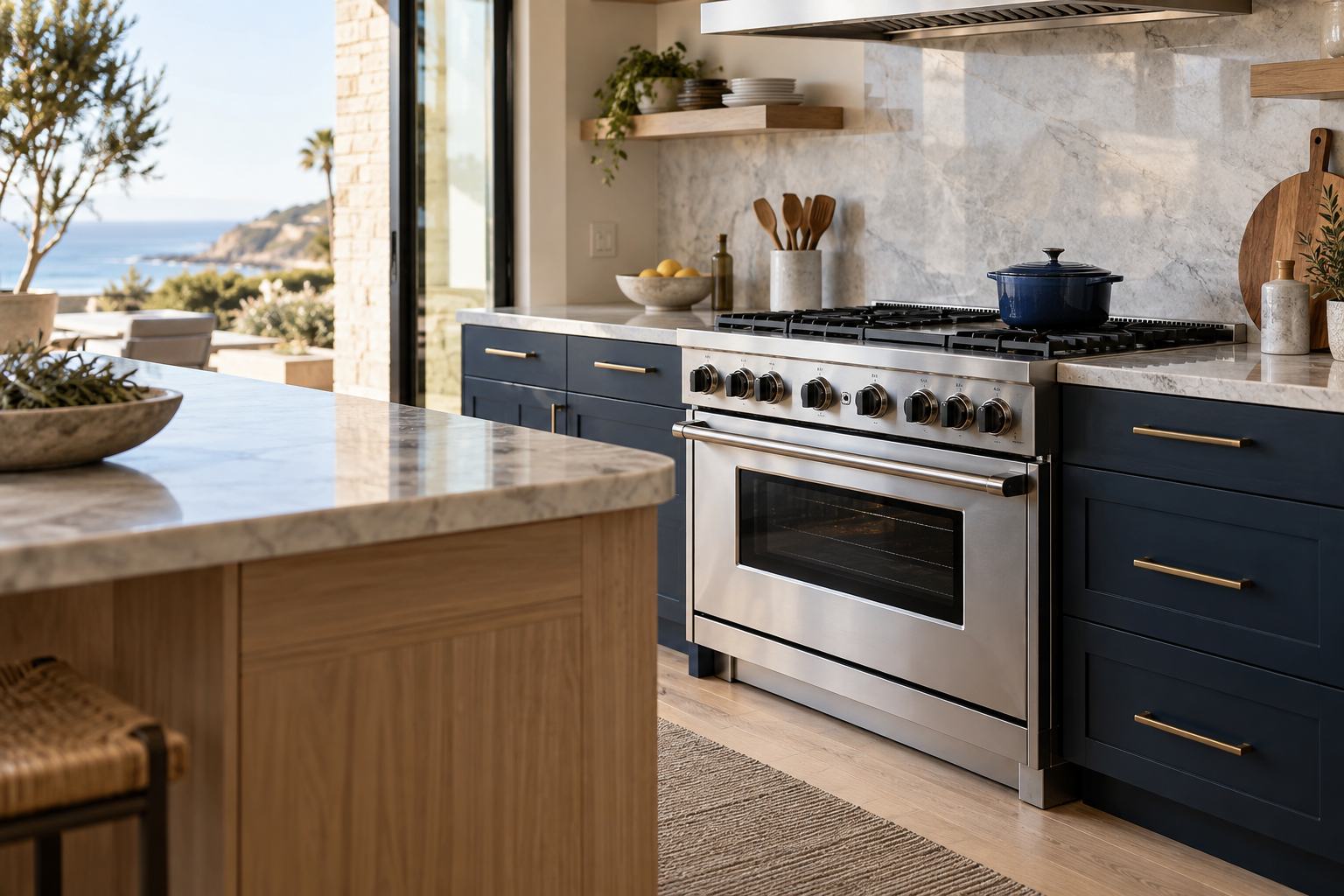
Viking wall ovens
Viking electric wall ovens run an electronic control whose F-codes are documented in the brand's own service manuals - door latch, sensor, cooling fan, probe and board communication each have a number. The code on the display is the visit's first instruction, so photograph it before any reset.
A photo of the model label and the complete installation helps the team understand the configuration before the visit.
VSOE single and VDOE double electric ovens with TruConvec convection.
The accessible electric wall oven line on shared control logic.
The Tuscany-inflected flagship ovens - their own trim, shared philosophy.
Designer-era single ovens whose service manual documents the F-code table.
Start with the symptom
A symptom narrows the inspection; it does not identify the failed component. The $99 visit confirms the actual fault on the exact model before any repair is authorized.
Elements, relays and sensor tested in order - codes are a head start, not a requirement.
The F01 pattern - latch motor and switches, never force.
RTD calibration against a reference thermometer - drift is measurable.
TruConvec fan and motor - distinct from the cooling fan.
Latch, thermal cutout and door seal - the documented trio.
Power path and control board - photograph, then one power cycle.
Series and model numbers
One electronic-control philosophy across generations - the model prefix and serial decide the exact board and latch hardware, the F-code decides where the visit starts.
Model label
The data plate is on the oven cell frame, visible when the door is open - typically along the left side or bottom of the frame. Photograph it with the door fully open. Photograph the complete label — the full model and serial identify parts and production year better than the series name alone.
Indicators and alerts
For any message not shown, use the manual for the exact model rather than a generic list.
Viking diagnostics
The F-code table above comes from Viking's own service manuals for the electronic oven control platform. Meanings circulating online that conflict with the service literature are excluded.
Preventive service and owner care
Alpha Pro provides preventive and general maintenance for Viking wall ovens. The appliance design determines which procedures are accessible and appropriate.
Owner maintenance
Professional maintenance
A professional visit can evaluate accessible systems without assuming every procedure applies to every model.
Diagnosis before parts
Call or book with the model label, exact behavior, any displayed codes, photos, and access notes.
The technician examines the reported condition in context: preheat behavior, temperatures, elements, door fit, controls, and relevant components.
Findings and proposed work are explained before repair proceeds. The residential diagnostic is credited toward an approved repair.
Service area and operating context
Poway sits in the hills off I-15 - ranch properties of Old Poway, gated Green Valley, newer streets off Espola Road. Garage refrigerators fight summer heat, canyon dust clogs condensers, and hard water leaves scale in ice makers and washer valves.
Inland heat and hard water set the pattern here: garage refrigerators work hardest in summer, dust clogs condensers, and scale builds in ice makers, dishwashers and washer valves.
During maintenance, accessible metal surfaces can be inspected for corrosion, moisture exposure, or conditions that may warrant attention. Location alone does not establish the cause of a failure.
A better repair decision
There is no honest universal age or price threshold. Start with the exact model and a diagnosis.
Local notes · Poway
Poway summers are warm and dry, with the hot season running from about July into late September. A Viking wall oven sits in a closed cabinet, and its control board is mounted above a cavity that gets very hot. In an inland kitchen that is already warm, the cooling fan becomes the most important part in the oven. When it slows or stops, heat builds around the electronics and faults follow. We repair Viking single and double wall ovens across Poway, and we pay particular attention to heat-related failures.
Wall ovens in tight cabinetry run their control boards hot, and inland summer kitchens add to it. Poway fits that pattern. The August average high is about 84°F, and many homes cook through the hot season with windows open and the kitchen warm. Each bake adds heat inside the cabinet, and each self-clean adds far more. The oven's cooling fan moves that heat out, and when bearings wear or dust loads the blades, the board and relays sit in heat they were not meant for. Poway's rural setting brings extra dust. Horse trails, dirt roads and arenas are part of daily life, and dust can settle on fan blades and vents. Wildfire smoke and ash from past events, including the 2003 Cedar Fire and 2007 Witch Creek Fire, show how much fine debris can drift into homes. Poway's housing is mostly from 1970 to 1999, with many large family homes averaging 2.9 people, so plenty of ovens are older and heavily used. That mix makes cooling fans, boards and self-clean latches the parts to watch.
Symptom: A hot control panel, a fan that grinds or is silent after cooking, or a cooling fan fault on the display. Cause: Worn motor bearings, sometimes with dust-loaded blades adding drag. Fix: We replace the cooling fan motor, clean the path and check the board for heat stress.
Symptom: F3, an erratic display or an element that stays on after the oven is turned off. Cause: Board components and relays wear out from sustained heat and age. Fix: We confirm the sensor and latch inputs are good, then replace the control if parts exist for the model.
Symptom: The door stays locked after a clean cycle, or the cycle will not start at all. Cause: The latch motor or latch switch has failed, often after years of clean cycles. Fix: We cool the oven, reset power, test the latch parts and replace the assembly.
Symptom: Broil does nothing, or you see a split or bubble on the upper element. Cause: Element burnout, often during or after self-clean, when the cavity runs far hotter than a normal bake. Fix: We test and replace the element and check terminal wiring for burn marks.
Plan self-clean for cooler months or early mornings, not a hot August afternoon. Wipe heavy spills first and never run two cleans in a row. Listen after cooking; the cooling fan should run smoothly for a while as the oven cools. If it is loud or silent, call before the board suffers. Dust around the oven's vents and trim after windy or smoky days. Check the door gasket each year, since a leaky seal sends extra heat into the cabinet.
We cover the whole city, from Old Poway and Garden Road to Green Valley, The Grove and Old Coach Estates. Let us know about gates, long driveways, dogs or horses near the entry. The technician reads any code, checks the cooling fan and board temperature, measures the sensor, tests elements and the latch, and gives you a quote before starting. Have the model and serial number ready, and tell us whether the problem started during self-clean or on a hot day.
Fans, elements, latches and sensors are low- to mid-cost repairs and nearly always worth doing. A new cooling fan can also protect a working board. If an older model needs a control that is no longer made, replacement may be the practical option, and cutout sizes vary, so cabinet work may follow. The $99 diagnostic is credited toward the repair.
Helpful answers
Clear preparation makes a service request easier to evaluate.
Yes - same-day windows are offered across San Diego County subject to the day's schedule. Availability is confirmed for the exact address when you book.
We take requests across Poway (ZIP 92064, 92074). Share gate codes, parking or building access when booking so the technician can plan the visit.
Yes. It is non-refundable and credited toward the total repair cost if you proceed. There are no residential exceptions.
A 90-day labor warranty and a 1-year parts warranty, both starting on the date the repair is completed.
No. A symptom narrows the search, but the diagnostic visit on the exact model confirms the actual fault before any repair is authorized.
The door latch is not where the control expects it - common during or after self-clean. The latch assembly is tested and repaired; do not force the door in the meantime.
Pyrolytic heat stresses the thermal safety and latch - a documented pattern with documented parts. The visit tests both directly.
The RTD sensor is measurable - drift shows up as a resistance offset, and calibration is verified against a reference during the visit.
On the oven cell frame, visible with the door open - photograph the full plate.
Yes - the DSOE platform is documented in Viking's service literature, and parts are confirmed from the serial.
The board sits above the oven cavity inside a cabinet, and the cooling fan removes that heat. On warm inland days the kitchen adds to the load. A panel that feels much hotter than before often means the cooling fan is slowing down, so have it checked soon.
It is safe if the oven is healthy, but it adds a lot of heat to the cabinet and board. Many owners in inland areas prefer to run self-clean in cooler months or early in the morning. Wipe heavy spills first to keep the cycle's workload down.
Turn the power off at the breaker and leave it off. A relay on the control board is likely stuck closed, which can overheat the oven and the cabinet around it. This needs a technician to test the board before the oven is used again.
Dust mainly affects the cooling fan and vents. Heavy buildup adds drag to the fan and restricts airflow around the controls. Wiping the vents after windy days and fixing a noisy fan early helps protect the electronics.
Repair and preventive care
Schedule help for an active problem or arrange preventive maintenance for the appliance.
We are ready to help with your appliance repair needs.
Call Us
(619) 877-6701Visits by appointment
11364 Nawa Way,Business Hours
Email Us
Email us