

7 Series
48 and 60-inch professional ranges with the Viking Elevation burners.
Viking service · Chula Vista
Same-day Viking range repair in Chula Vista, Mon–Sat 7 AM–6 PM. $99 service call, credited to the repair. 3-month labor / 1-year parts warranty. Licensed (A51423) and insured up to $1M. Family-owned and run by Viktor, owner and lead technician. Rated 5.0★ from 490 Google reviews. Call (619) 877-6701.
$99 service call, credited · Same-day service Mon–Sat · Approval before work · License A51423 · EPA-certified technicians · Insured up to $1M
The diagnostic fee is non-refundable and credited toward the total repair cost when you proceed.
Commercial service visits are priced separately at $150.
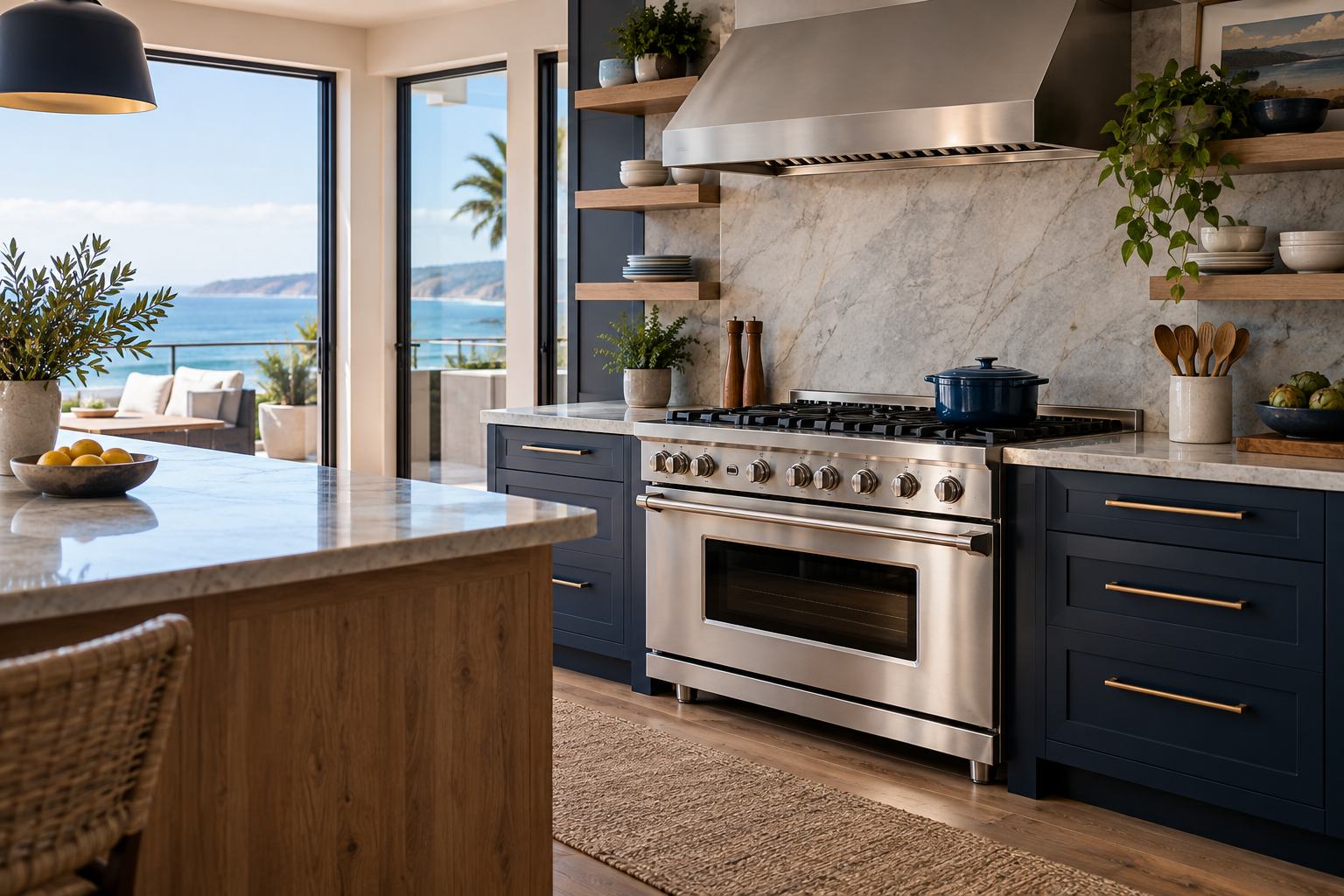
Viking ranges
Viking invented the professional home range, and the family splits cleanly for service: all-gas VGR ranges are mechanical machines diagnosed at the flame, while dual-fuel VDR ranges carry the electronic oven control whose F-codes Viking documents in its service manuals. Knowing which half you own is half the diagnosis.
A photo of the model label and the complete installation helps the team understand the configuration before the visit.
48 and 60-inch professional ranges with the Viking Elevation burners.
30 to 48-inch all-gas and dual-fuel ranges - the heart of the installed base.
The accessible professional line sharing burner architecture.
Earlier professional ranges, widely installed in San Diego and still parts-supported.
Start with the symptom
A symptom narrows the inspection; it does not identify the failed component. The $99 visit confirms the actual fault on the exact model before any repair is authorized.
Gas: thermostat and igniter current. Dual-fuel: RTD and control - both measurable.
SureSpark electrodes, module and caps - after the moisture check.
The F01 pattern on dual-fuel - latch service, never force.
Convection fan, door seal and calibration - tested, not guessed.
Broil igniter or element per fuel type - a direct test.
The professional extras have their own burners and thermostats - each testable.
Series and model numbers
G or D is the fork in the road: all-gas ranges are diagnosed at the flame, dual-fuel ranges are read from the display - and the serial decides the parts book for both.
Model label
The data plate sits behind the oven door on the cell frame on most models; some gas ranges carry it under the front of the range top or behind the kick panel. Photograph model and serial together. Photograph the complete label — the full model and serial identify parts and production year better than the series name alone.
Indicators and alerts
For any message not shown, use the manual for the exact model rather than a generic list.
Viking diagnostics
F-codes apply to dual-fuel VDR ranges and come from Viking's own service manuals for the electronic oven control; all-gas ranges have no codes and are diagnosed at the flame. Code lists circulating online that ignore this split are excluded.
Preventive service and owner care
Alpha Pro provides preventive and general maintenance for Viking ranges. The appliance design determines which procedures are accessible and appropriate.
Owner maintenance
Professional maintenance
A professional visit can evaluate accessible systems without assuming every procedure applies to every model.
Diagnosis before parts
Call or book with the model label, exact behavior, any displayed codes, photos, and access notes.
The technician examines the reported condition in context: ignition, flame quality, temperatures, elements, controls, door fit, and relevant components.
Findings and proposed work are explained before repair proceeds. The residential diagnostic is credited toward an approved repair.
Service area and operating context
From established west-side streets to Otay Ranch's new communities, Chula Vista runs every appliance generation - big families, big laundry loads and builder suites hitting their first repairs.
South Bay and East County bring summer heat, hard water and hard-working family appliances - practical repairs with strong parts availability are the local priority.
During maintenance, accessible metal surfaces can be inspected for corrosion, moisture exposure, or conditions that may warrant attention. Location alone does not establish the cause of a failure.
A better repair decision
There is no honest universal age or price threshold. Start with the exact model and a diagnosis.
Local notes · Chula Vista
Chula Vista households are large. The Census puts the average at about 3.1 people per home, and many kitchens cook two or three meals a day. A Viking range in that kind of home builds up oven hours fast, and the parts that wear by the hour go first: the oven igniter, the temperature sensor and the door latch. About a third of the city's housing dates from 2000 or later, largely in Eastlake, Otay Ranch and Millenia, so plenty of ranges bought with those homes are now well out of warranty. That is where we come in.
A gas Viking oven lights through a hot-surface igniter. The igniter heats until it passes enough current to open the oven safety valve, and its resistance creeps up with every cycle. A home that bakes nightly for five people simply ages that part faster than one that roasts on Sundays. Dual-fuel models trade the igniter for bake and broil elements and a temperature probe, and those also count hours. Eastern Chula Vista grew in waves: Eastlake began in 1986, Rancho del Rey in 1989 and Otay Ranch in 1999, so many ranges there are original to the house. On the west side, near the bay, the concern shifts to air. Weather Spark counts more muggy days here than in inland cities, and humid, salty bay air speeds corrosion on grates, trim and exposed ignition terminals as a general matter. Summer highs are mild, with an August mean daily high near 77 degrees at the city's NOAA station, but September has produced highs up to 103 degrees. A long bake on a hot afternoon puts extra heat into the control area of a dual-fuel range, and heat is hard on electronics.
Symptom: The igniter glows, dinner is late, and the oven either never lights or lights only after a long wait. Cause: An igniter worn by heavy daily use that no longer pulls enough current to open the safety valve. Fix: We measure igniter amperage, replace it if it is below specification, and verify the valve opens.
Symptom: Recipes that used to work now burn or come out pale; digital models may show a fault code. Cause: A temperature sensor (RTD) or its wiring damaged by cavity heat, or less often the oven control itself. Fix: We ohm-check the sensor at the control terminals and replace the sensor before considering a board.
Symptom: Turning on one burner starts every igniter, and the clicking continues after the flame lights. Cause: A wet or shorted burner switch at a valve, often after a large pot boils over, or a failing spark module. Fix: We isolate the switch that stays closed and replace it, or replace the spark module if the switches test good.
Symptom: The dual-fuel oven locks and will not open once self-clean ends. Cause: A latch motor or switch worn by repeated high-heat cleans in a kitchen that cooks every day. Fix: Full cool-down and a power reset first; if it stays locked, we test and replace the latch assembly.
In a large family, the range rarely gets a quiet day, so small habits add up. Keep burner caps and ports clean and dry, and wipe spills as soon as the cooktop is cool enough to touch. Clean the oven by hand between self-clean cycles so the cycle is not your only method. When the oven starts to take noticeably longer to preheat, book a check before it quits entirely; a weak igniter gives warning before it fails. Keep the model number handy so parts can be matched quickly.
Many east-side neighborhoods are master-planned with HOA rules, and some have gated entries, so share the gate code when you book. Townhomes and apartment complexes may need a parking pass or a guest spot. We will need room to pull the range forward if the problem is behind it, so clear the floor in front. Have the model and serial number, a short description of the symptom, and a photo of any code on the display. If you smell gas, leave right away and call SDG&E first.
A Viking bought with a 2005 Otay Ranch home is now roughly two decades old. The parts that fail at that age, such as igniters, sensors, switches and latches, are inexpensive next to a new professional range, so repair is usually the better value. Replacement makes more sense if the cavity is damaged or a discontinued control board is the problem. The $99 diagnostic comes off the repair cost if you go ahead.
Helpful answers
Clear preparation makes a service request easier to evaluate.
Yes - same-day windows are offered across San Diego County subject to the day's schedule. Availability is confirmed for the exact address when you book.
We take requests across Chula Vista (ZIP 91910, 91911, 91913-91915). Share gate codes, parking or building access when booking so the technician can plan the visit.
Yes. It is non-refundable and credited toward the total repair cost if you proceed. There are no residential exceptions.
A 90-day labor warranty and a 1-year parts warranty, both starting on the date the repair is completed.
No. A symptom narrows the search, but the diagnostic visit on the exact model confirms the actual fault before any repair is authorized.
On all-gas models the oven igniter weakens with age and stops pulling enough current to open the safety valve - the classic repair. Dual-fuel models report through F-codes instead.
A documented fault from Viking's service manuals - F01 latch, F02 sensor, F03 cooling fan, F08 board communication. Photograph it before resetting.
Conversion with the correct Viking kit and orifices is part of the service scope, with combustion verified after.
Behind the oven door on the cell frame on most models - some carry it under the range top front or behind the kick panel.
Yes - the legacy professional platforms are well documented, and parts availability is confirmed from the serial.
The igniter needs time to heat before the valve opens, so a short delay is normal. What is not normal is a delay that keeps growing, or an igniter that glows without any flame. Both point to an igniter that has lost current draw. Replacing it is a routine repair.
Maybe not. Crowded racks block air movement. If the problem shows up with a single pan too, the sensor may be off or, in convection mode, the fan may be failing. A grinding noise from the back points to the fan motor. We test both before replacing anything.
Turn that burner off and let it dry, then try again later. Constant clicking is usually moisture, not a gas problem. If you smell gas at any time, stop, leave the home and call SDG&E. If clicking persists after drying, a switch or the spark module needs testing.
Yes. We cover the whole city, from the older neighborhoods west of Hilltop Drive to Eastlake, Otay Ranch, Rolling Hills Ranch and Millenia. Bayside homes tend to show more corrosion on ignition parts, while east-side kitchens more often need worn oven parts.
Repair and preventive care
Schedule help for an active problem or arrange preventive maintenance for the appliance.
We are ready to help with your appliance repair needs.
Call Us
(619) 877-6701Visits by appointment
11364 Nawa Way,Business Hours
Email Us
Email us