
PFQ97 UltraFast
The ventless heat-pump washer-dryer combo - one drum, no duct, and GE's only published dryer codes.
GE Profile service · Poway
Same-day GE Profile dryer repair in Poway, Mon–Sat 7 AM–6 PM. $99 service call, credited to the repair. 90-day labor / 1-year parts warranty. Licensed (A51423) and insured up to $1M. Family-owned and run by Viktor, owner and lead technician. Rated 5.0★ from 490 Google reviews. Call (619) 877-6701.
$99 service call, credited · Same-day service Mon–Sat · Approval before work · License A51423 · EPA-certified technicians · Insured up to $1M
The diagnostic fee is non-refundable and credited toward the total repair cost when you proceed.
Commercial service visits are priced separately at $150.
GE Profile dryers
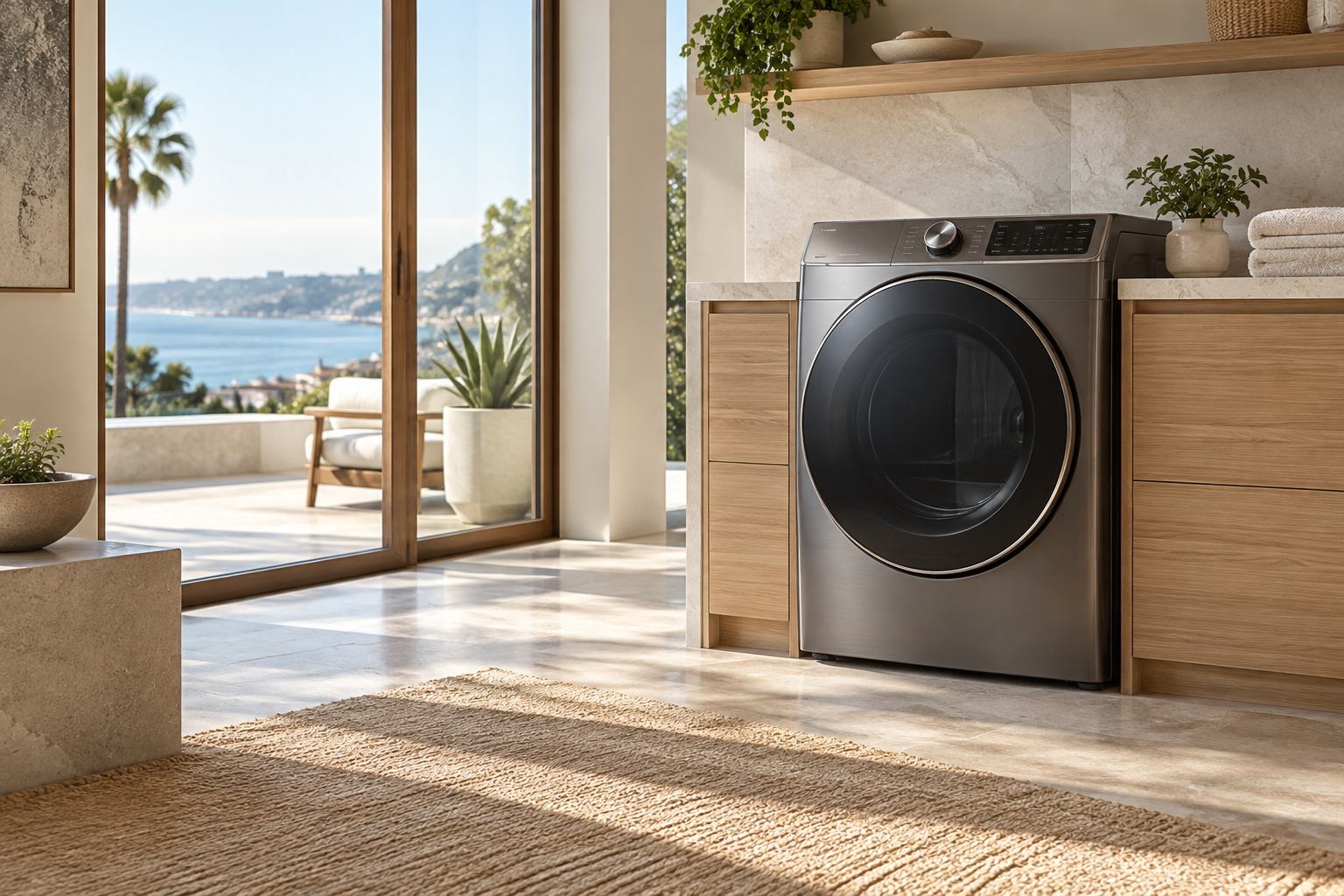
GE Profile drying now spans two worlds: PFD vented front-loads with Sanitize cycles, and the PFQ97 UltraFast combo - a ventless heat-pump machine that washes and dries in one drum. GE publishes fault codes only for the combo; the vented machines are diagnosed hands-on, which is how airflow problems are found anyway.
A photo of the model label and the complete installation helps the team understand the configuration before the visit.
The ventless heat-pump washer-dryer combo - one drum, no duct, and GE's only published dryer codes.
7.8 cu ft vented front-loads with Steam Sanitize+ and SmartHQ.
Dryers paired to the Smarter Wash top-load washers.
Stacked pairs and long-vent installs - both change the airflow math service checks.
Start with the symptom
A symptom narrows the inspection; it does not identify the failed component. The $99 visit confirms the actual fault on the exact model before any repair is authorized.
Vent run, moisture sensors and heat source - the vented trio, in order.
Gas valve coils or heater element and thermostats - split by fuel type.
Codes 353 and 18 territory - filters first, heat pump second.
Moisture sensor reading versus reality - testable at the sensor bars.
Rollers, idler and belt - mechanical and fixable.
Water valve and nozzle on Steam Sanitize models.
Series and model numbers
The prefix splits the fleet: PFQ is ventless heat-pump, PFD and PTD are vented - and the diagnosis path splits with it.
Model label
The model and serial label is inside the door opening - on the frame revealed when the door is open. The combo carries its label in the same place, door open. Photograph the complete label — the full model and serial identify parts and production year better than the series name alone.
Indicators and alerts
For any message not shown, use the manual for the exact model rather than a generic list.
GE Profile diagnostics
Codes 353 and 18 come from GE's official UltraFast Combo fault-code page - the only published Profile dryer codes. For vented machines, third-party E-code tables assign different meanings to the same numbers across models, so they are excluded and the machine is tested directly.
Preventive service and owner care
Alpha Pro provides preventive and general maintenance for GE Profile dryers. The appliance design determines which procedures are accessible and appropriate.
Owner maintenance
Professional maintenance
A professional visit can evaluate accessible systems without assuming every procedure applies to every model.
Diagnosis before parts
Call or book with the model label, exact behavior, any displayed codes, photos, and access notes.
The technician examines the reported condition in context: airflow, heat, cycle behavior, drum condition, controls, and relevant components.
Findings and proposed work are explained before repair proceeds. The residential diagnostic is credited toward an approved repair.
Service area and operating context
Poway sits in the hills off I-15 - ranch properties of Old Poway, gated Green Valley, newer streets off Espola Road. Garage refrigerators fight summer heat, canyon dust clogs condensers, and hard water leaves scale in ice makers and washer valves.
Inland heat and hard water set the pattern here: garage refrigerators work hardest in summer, dust clogs condensers, and scale builds in ice makers, dishwashers and washer valves.
During maintenance, accessible metal surfaces can be inspected for corrosion, moisture exposure, or conditions that may warrant attention. Location alone does not establish the cause of a failure.
A better repair decision
There is no honest universal age or price threshold. Start with the exact model and a diagnosis.
Local notes · Poway
Poway calls itself the City in the Country, and its laundry reflects that. Riding clothes, barn towels and dog bedding carry dust, hay chaff and pet hair into the dryer, and all of it ends up in the lint screen and exhaust duct. Summers are hot and dry, many dryers sit in garages, and Santa Ana winds push dust around from fall into spring. For a GE Profile dryer, that combination makes airflow the first thing to check. Here is how we handle Profile dryers in Green Valley, Old Coach Estates and the rest of Poway.
Poway has more than 78 miles of city trails where horses have priority, and keeping a horse property means laundry heavy with arena dust and hay debris. Pet hair adds to it. Those fibers overload the lint screen and settle in the exhaust duct, where they narrow the airflow path. U.S. Fire Administration data rank failure to clean as the leading contributing factor in home dryer fires, so this is a safety issue as much as a performance one. The climate compounds it. Poway's hot season runs roughly from July through late September, with August highs averaging about 84°F. Most homes here are single-family, largely built between 1970 and 1999, with garages that hold the washer, dryer and often a second fridge. A dryer drawing hot garage air and pushing exhaust through a lint-lined duct runs close to its thermal limits. Santa Ana winds bring very dry, dusty air in fall and winter, and fine ash from wildfire smoke can settle in vent hoods; major parts of Poway were evacuated during the 2003 Cedar and 2007 Witch Creek fires. Water hardness, averaging 236 mg/L in the city's 2024 report, mostly matters for steam models.
Symptom: Clothes still damp after a full cycle, a hot cabinet top, or a burning-lint smell. Cause: Dust, hay and hair slip past the screen in small amounts and build up in the duct and on the blower wheel. Airflow drops and exhaust temperature climbs. Fix: We clean the duct end to end, open the cabinet to clear the blower housing and replace foil or plastic duct with metal. Stop using the dryer if you smell burning.
Symptom: No start or no heat, often discovered after a hot-season load. Cause: Warm garage intake air plus a partly blocked duct pushes exhaust heat high enough to open the one-time fuse. Fix: We confirm vent flow, install a new fuse and test the cycling thermostat and high-limit, since they see the same heat.
Symptom: Thumping, scraping or a belt squeal that grows louder over weeks. Cause: Heavy, bulky items such as horse blankets and dog beds stress rollers, idler and belt, and hair wraps around roller shafts and adds drag. Fix: We replace the wear kit together and clean hair from the shafts and drum support areas.
Symptom: Cold air on a gas model; the igniter may glow briefly with no flame. Cause: A failed igniter, weak gas-valve coils or a bad flame sensor. Fix: We test and replace the failed part. Gas valves are not a homeowner job. If you smell gas, leave the house and call SDG&E, then us.
Brush dust and hay off riding clothes and horse blankets outside before washing. Clean the lint screen every load, per GE, and scrub it with a brush and water every few months if it looks glazed. Plan on vent cleaning more often than the standard yearly interval if the household includes animals or barn work. After Santa Ana wind or smoke events, look at the exterior vent hood for dust and ash.
Most Poway homes are single-family with driveways, so parking is easy, and many laundry setups sit in the garage. Clear space in front of the dryer and, if possible, behind it, since the vent and power or gas connections are at the back. Long rural driveways and gated properties are common; send gate instructions when you book, and let us know about dogs or horses near the work area. Have the model and serial number from the door-frame label ready and tell us gas or electric. If the duct runs through an attic or a long wall, tell us where it exits outside.
For almost every failure we see here, yes. Duct cleaning, fuses, rollers, belts and igniters are low-cost jobs next to a new dryer. The key is fixing the airflow cause at the same time; a new dryer on a clogged duct just moves the problem to a new machine. Replacement makes sense when the drum or cabinet is damaged or the unit has had repeated major failures. Our $99 diagnostic is credited toward the repair.
Helpful answers
Clear preparation makes a service request easier to evaluate.
Yes - same-day windows are offered across San Diego County subject to the day's schedule. Availability is confirmed for the exact address when you book.
We take requests across Poway (ZIP 92064, 92074). Share gate codes, parking or building access when booking so the technician can plan the visit.
Yes. It is non-refundable and credited toward the total repair cost if you proceed. There are no residential exceptions.
A 90-day labor warranty and a 1-year parts warranty, both starting on the date the repair is completed.
No. A symptom narrows the search, but the diagnostic visit on the exact model confirms the actual fault before any repair is authorized.
GE's official meaning: the lint filter is clogged with fabric-softener residue. The foam element rinses in warm water, the mesh cleans with a soft brush - and chronic 353 gets a dosing review.
No - the heat pump condenses moisture and sends it down the drain. Its health lives in the filters and drain path, which is exactly what codes 353 and 18 police.
GE does not publish meanings for these, and internet tables conflict by model. Photograph it; the visit reads it against the model's service data and tests the named circuit directly.
Inside the door opening, on the frame - visible with the door open.
Yes - both. The suffix letter in the model (G or E) tells the fuel, and the heat-source diagnosis follows it.
GE recommends at least a yearly vent cleaning. Homes with barn laundry, arena dust or several pets load the duct faster, so every six months is a sensible starting point. Signs you need it sooner include longer dry times, a hot laundry area or a cabinet top that is warm to the touch.
Heat alone rarely breaks a dryer, but it narrows the margin. The dryer starts with warmer intake air, and if the duct is partly restricted, exhaust temperatures reach the fuse or high-limit thermostat sooner. Keep the vent clean and don't pile items against the cabinet.
Look at the exterior vent hood and the lint screen area for ash and dust once the air clears. Ash won't necessarily cause a failure, but it adds to the material collecting in the duct. If the dryer ran often during a smoke event, a vent cleaning is a reasonable precaution.
Fine hair and lint can bypass a worn or poorly seated lint screen, or escape through a loose duct connection, and collect inside the cabinet near the element or burner. That is a fire hazard. Unplug the dryer and have the cabinet cleaned and the screen seal and duct joints checked.
Repair and preventive care
Schedule help for an active problem or arrange preventive maintenance for the appliance.
We are ready to help with your appliance repair needs.
Call Us
(619) 877-6701Visits by appointment
11364 Nawa Way,Business Hours
Email Us
Email us