
ZDP 36/48-inch
ZDP364 and ZDP486 dual-fuel ranges - gas rangetop over an electronic-control electric oven.
Monogram service · Poway
Same-day Monogram range repair in Poway, Mon–Sat 7 AM–6 PM. $99 service call, credited to the repair. 90-day labor / 1-year parts warranty. Licensed (A51423) and insured up to $1M. Family-owned and run by Viktor, owner and lead technician. Rated 5.0★ from 490 Google reviews. Call (619) 877-6701.
$99 service call, credited · Same-day service Mon–Sat · Approval before work · License A51423 · EPA-certified technicians · Insured up to $1M
The diagnostic fee is non-refundable and credited toward the total repair cost when you proceed.
Commercial service visits are priced separately at $150.
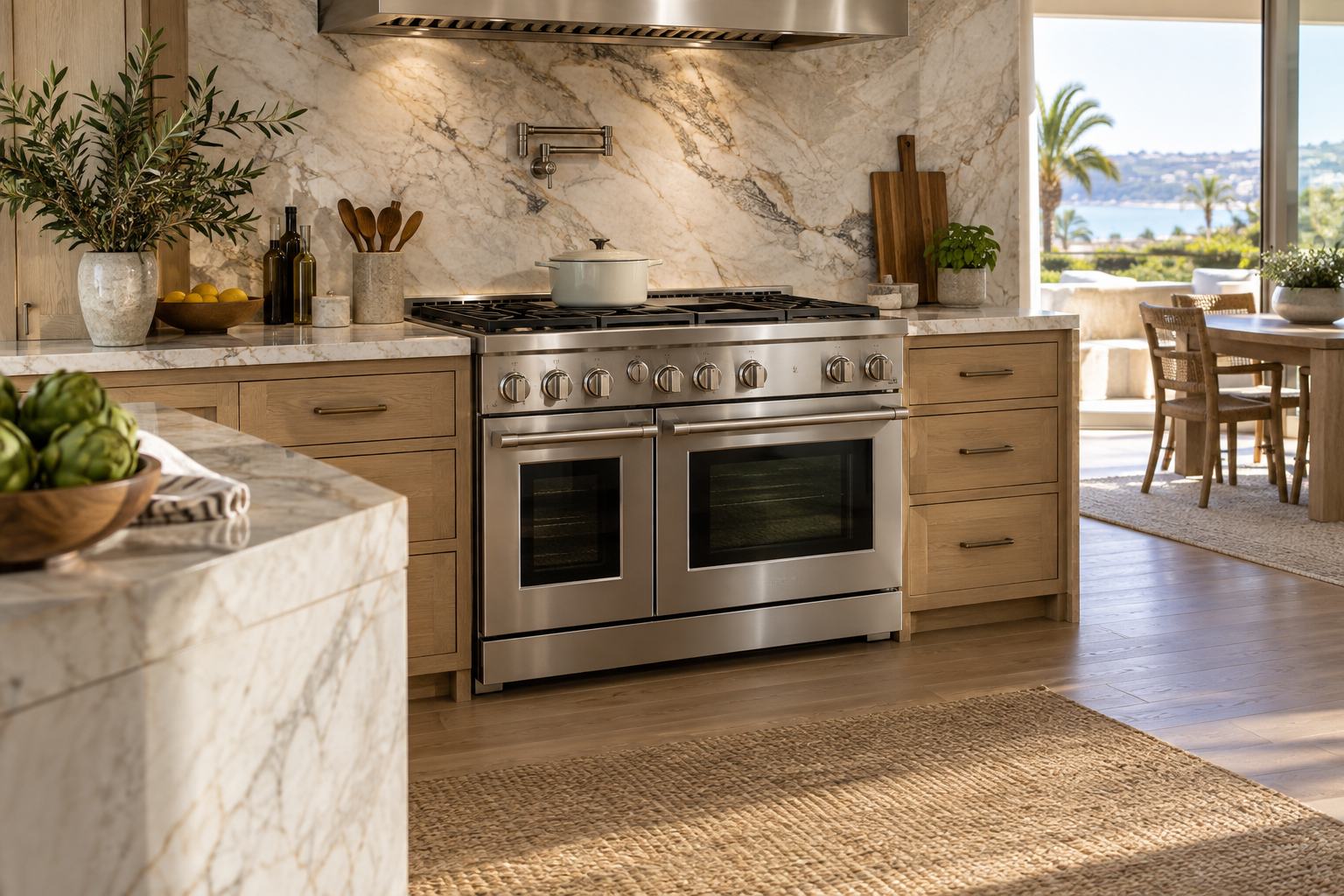
Monogram ranges
Monogram professional ranges come in two languages: all-gas ZGP models that are pure mechanics - brass valves, spark modules, no codes - and dual-fuel ZDP models whose electric ovens speak GE's documented F-code dialect. The model prefix tells the visit which toolbox to bring.
A photo of the model label and the complete installation helps the team understand the configuration before the visit.
ZDP364 and ZDP486 dual-fuel ranges - gas rangetop over an electronic-control electric oven.
ZGP364 and ZGP486 all-gas ranges - mechanical valves and spark ignition throughout.
Brass badge and burner accents - cosmetic trim over the same platforms.
Burner-grill-griddle combinations that add their own service points.
Start with the symptom
A symptom narrows the inspection; it does not identify the failed component. The $99 visit confirms the actual fault on the exact model before any repair is authorized.
On dual-fuel: sensor and element territory. On gas: the oven igniter weakening - measured in amperes, not guessed.
Moisture and cap seating first, then electrode, spark module and valve.
Sensor accuracy and convection fan on ZDP ovens; burner and flame geometry on gas.
Its own valve and igniter - serviced as the separate appliance it effectively is.
ZDP thermal cutouts and door lock - the classic post-pyro pattern.
Taken seriously: connections leak-tested; ventilate and call the gas utility first if the smell is strong.
Series and model numbers
ZDP means an electric oven and a code dialect; ZGP means all-gas and all-mechanical - one letter, two entirely different diagnoses.
Model label
The rating plate sits on the oven frame visible when the door is open, or behind the kick panel on pro models. Photograph the full plate - it also records gas type, which matters after LP conversions. Photograph the complete label — the full model and serial identify parts and production year better than the series name alone.
Indicators and alerts
For any message not shown, use the manual for the exact model rather than a generic list.
Monogram diagnostics
F-codes apply only to the electric ovens in dual-fuel ZDP ranges and come from GE Appliances' published oven fault-code documentation, independently cross-confirmed. All-gas ZGP ranges have no code system at all - stated plainly rather than papered over.
Preventive service and owner care
Alpha Pro provides preventive and general maintenance for Monogram ranges. The appliance design determines which procedures are accessible and appropriate.
Owner maintenance
Professional maintenance
A professional visit can evaluate accessible systems without assuming every procedure applies to every model.
Diagnosis before parts
Call or book with the model label, exact behavior, any displayed codes, photos, and access notes.
The technician examines the reported condition in context: ignition, flame quality, temperatures, elements, controls, door fit, and relevant components.
Findings and proposed work are explained before repair proceeds. The residential diagnostic is credited toward an approved repair.
Service area and operating context
Poway sits in the hills off I-15 - ranch properties of Old Poway, gated Green Valley, newer streets off Espola Road. Garage refrigerators fight summer heat, canyon dust clogs condensers, and hard water leaves scale in ice makers and washer valves.
Inland heat and hard water set the pattern here: garage refrigerators work hardest in summer, dust clogs condensers, and scale builds in ice makers, dishwashers and washer valves.
During maintenance, accessible metal surfaces can be inspected for corrosion, moisture exposure, or conditions that may warrant attention. Location alone does not establish the cause of a failure.
A better repair decision
There is no honest universal age or price threshold. Start with the exact model and a diagnosis.
Local notes · Poway
Poway's open-country setting is part of its appeal, and it also shapes what fails on a gas range. Santa Ana winds push fine dust through the valley, especially inland where they blow hardest. Horse properties and 78-plus miles of city trails bring arena and trail dust indoors. After the Cedar and Witch fires forced evacuations in 2003 and 2007, many owners also learned what ash does to a kitchen. On a Monogram ZGP or ZDP range, dust and ash settle in the small openings that make a gas appliance work.
A sealed gas burner relies on precise openings. Each port meters a small jet of gas, the orifice below sets the flow, and the air shutter mixes in oxygen. Fine dust and ash settle into all of them. Partial clogging produces lifting or yellow, sooty flames. On the oven side of an all-gas ZGP range, dust on the igniter doesn't cause failure by itself, but a slow, weak ignition becomes more noticeable. Santa Ana conditions, from September through April, drop humidity sharply and move a lot of fine material. Poway sits in that path, and horse and trail dust add to it year-round. Heat is the other inland stress. August highs average 84 degrees, and the hot season runs from about July 1 to late September. A range working hard in a warm kitchen puts more load on its spark module and, on dual-fuel models, the oven control. Most Poway homes are detached single-family houses on generous lots, with room for a full-width pro range.
Symptom: Flames burn yellow, leave soot on pans, or lift away from the burner. Cause: Dust or ash partly blocking ports, the orifice or the air shutter. After a gas type change, the wrong orifice can cause the same symptom. Fix: We clean ports and orifices, set the air shutter, and verify gas type and regulator setting.
Symptom: Long wait before the oven burner lights, or slow preheat. Cause: On models with a hot-surface igniter, a weakened igniter may glow without drawing enough current to open the safety valve. Fix: We measure igniter current and replace the igniter. The valve is rarely at fault.
Symptom: One burner clicks and never catches while others light normally. Cause: A clogged port section near the electrode, a cracked electrode, or a misseated cap. Fix: We clear the ports, reseat the cap and replace the electrode if it's cracked.
Symptom: The electric oven won't heat and shows an F-code. Cause: GE's code table points F3 and F4 to the temperature sensor and F5, F8 or FF to the electronic control. Fix: We test the sensor first and replace the control only when it's confirmed at fault.
The standard advice is monthly burner cleaning with heavy use. In Poway, also clean after every wind event. Lift the caps, brush the burner bases and ports, and wipe the electrodes. Don't use water to rinse ash into the ports. Brush it out dry, then wipe. Check the flame after cleaning. It should be mostly blue with a steady shape. If your home was evacuated or smoke-affected, don't cook right away. Check for gas odor, inspect the connector, and light each burner one at a time.
Gas safety comes first. If you smell gas, leave the house and call SDG&E, then call us after the utility has cleared the line. For regular service, most Poway homes have easy driveway parking. On larger lots, share gate codes and directions for private or dirt roads, and tell us about loose animals. Have the model and serial number ready, and tell us whether the range runs on natural gas or propane. Photos of the flame help us plan the visit.
Most problems caused by dust and ash come down to cleaning, adjustment, or replacing inexpensive parts such as electrodes, igniters and switches. A Monogram pro range is built to last, and its burners, valves and hinges are serviceable. Replacement makes sense only when fire-related heat damaged the unit itself. In that case, a technician should inspect it before any use. The $99 diagnostic is credited toward the repair.
Helpful answers
Clear preparation makes a service request easier to evaluate.
Yes - same-day windows are offered across San Diego County subject to the day's schedule. Availability is confirmed for the exact address when you book.
We take requests across Poway (ZIP 92064, 92074). Share gate codes, parking or building access when booking so the technician can plan the visit.
Yes. It is non-refundable and credited toward the total repair cost if you proceed. There are no residential exceptions.
A 90-day labor warranty and a 1-year parts warranty, both starting on the date the repair is completed.
No. A symptom narrows the search, but the diagnostic visit on the exact model confirms the actual fault before any repair is authorized.
Only if it is a dual-fuel ZDP - the electric oven speaks GE's documented F-codes. All-gas ZGP ranges have no codes; they are diagnosed directly, which is just as precise.
The classic cause is a weakening oven igniter - it still glows but draws too little current to open the valve fully. It is measured, not guessed, and replacement is routine.
On the oven frame visible when the door is open, or behind the kick panel. The plate also records gas type - useful after LP conversions.
Orifice and regulator conversion with the manufacturer's kit is part of range service - and the rating plate gets updated so the next technician knows.
Yes - including grill and griddle sections, double ovens and the heavier logistics a 48-inch pro range involves.
Fine dust drawn into the burner ports and air openings upsets the gas-to-air mix, which produces a yellow, sooty flame. Brush the ports and caps clean and dry. If the flame is still yellow, have the orifices and air shutters checked, since a poor flame wastes gas and soots your pans.
Before cooking, check for gas odor. If you smell gas, leave and call SDG&E. Look behind the range for any damage to the connector. Brush ash out of the burners, then light one burner at a time. If anything seems wrong, don't use the range until it's inspected.
On gas ovens that use a hot-surface igniter, a slow light usually means the igniter is weakening. The safety valve won't open until the igniter draws enough current, so the design is fail-safe. Still, a late ignition can be louder than normal. Replace the igniter before it fails completely.
Yes, we work on both propane and natural gas ranges. A range must be set up with the correct orifices for its gas type, so let us know which one you have. If your range was converted, we can verify the orifices and regulator.
Repair and preventive care
Schedule help for an active problem or arrange preventive maintenance for the appliance.
We are ready to help with your appliance repair needs.
Call Us
(619) 877-6701Visits by appointment
11364 Nawa Way,Business Hours
Email Us
Email us