
DC5 series
The matching partner to the TC5 washer - simple controls, all-metal drum and cabinet.
Speed Queen service · Poway
Same-day Speed Queen dryer repair in Poway, Mon–Sat 7 AM–6 PM. $99 service call, credited to the repair. 90-day labor / 1-year parts warranty. Licensed (A51423) and insured up to $1M. Family-owned and run by Viktor, owner and lead technician. Rated 5.0★ from 490 Google reviews. Call (619) 877-6701.
$99 service call, credited · Same-day service Mon–Sat · Approval before work · License A51423 · EPA-certified technicians · Insured up to $1M
The diagnostic fee is non-refundable and credited toward the total repair cost when you proceed.
Commercial service visits are priced separately at $150.
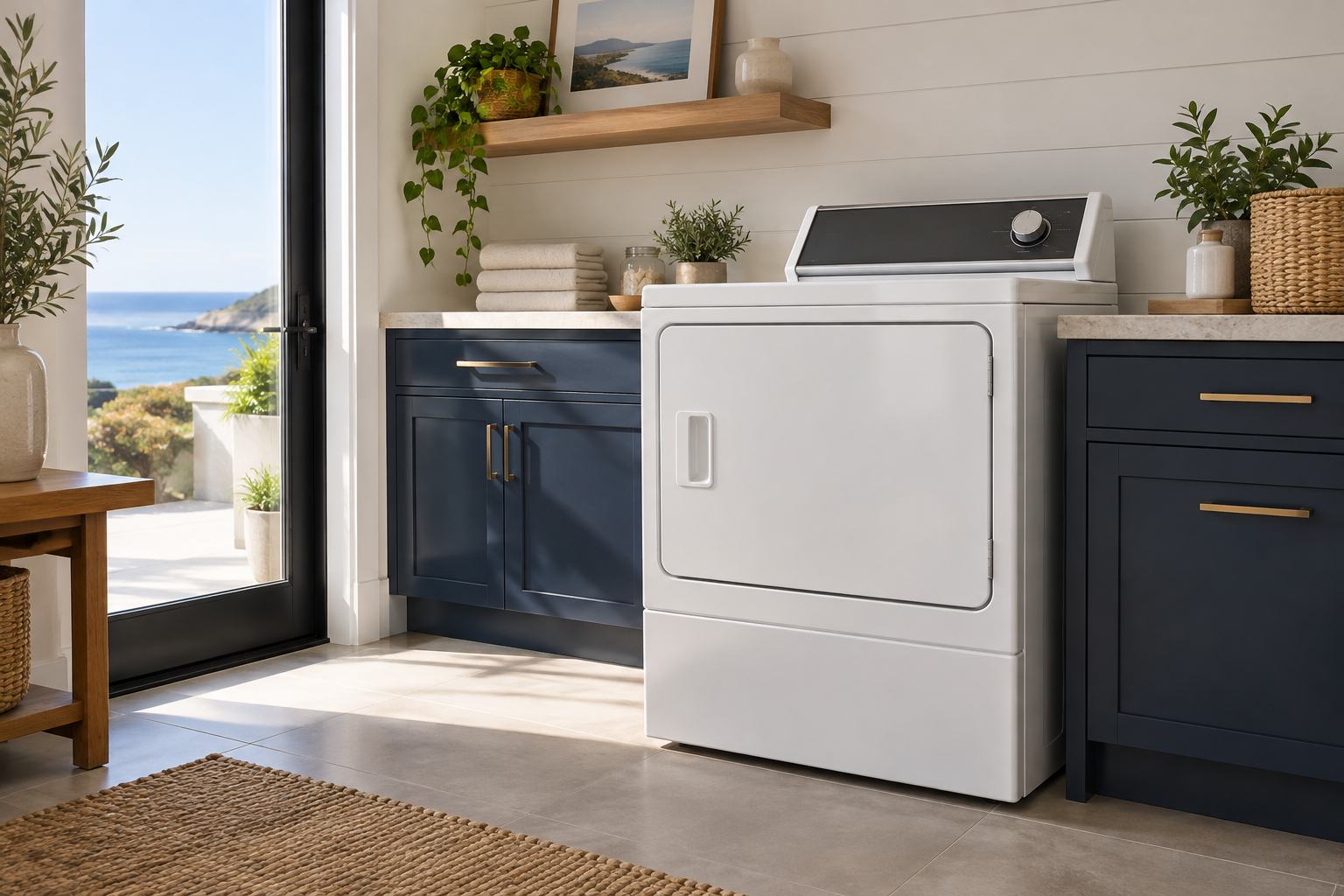
Speed Queen dryers
Speed Queen home dryers - the DC5 classic, DR5 and the flagship DR7 - are commercial-frame machines from Ripon, Wisconsin with a refreshingly plain service story: no public fault-code table for the home line. Knob-control models have no codes at all, and the electronic DR7 keeps its diagnostics in service mode. Honest machines get honest, instrument-first diagnosis.
A photo of the model label and the complete installation helps the team understand the configuration before the visit.
The matching partner to the TC5 washer - simple controls, all-metal drum and cabinet.
Electronic-knob models on the same commercial frame - gas and electric.
Touch-control dryers with moisture sensing and the deepest cycle set.
WE and WG suffixes - element service on one, igniter and valve-coil service on the other.
Start with the symptom
A symptom narrows the inspection; it does not identify the failed component. The $99 visit confirms the actual fault on the exact model before any repair is authorized.
Element and thermostats on electric; igniter, flame sensor and valve coils on gas - tested in order.
Airflow end to end - screen, duct, termination - then moisture sensing on DR7 models.
Door switch, thermal fuse and motor circuit - the documented mechanical order.
Rollers, idler and belt on an all-metal machine built to be rebuilt.
Cycling thermostats and airflow - overheating protection doing its job for a reason.
Taken seriously - connections leak-tested; ventilate and call the gas utility first if the smell is strong.
Series and model numbers
One commercial frame across the line - the control tier decides whether diagnosis starts at a knob, a display or a service-mode readout.
Model label
The model and serial plate is inside the door opening on the front panel. Photograph the full plate - Speed Queen parts order precisely by model and serial. Photograph the complete label — the full model and serial identify parts and production year better than the series name alone.
Indicators and alerts
For any message not shown, use the manual for the exact model rather than a generic list.
Speed Queen diagnostics
Verified honestly: no published residential code table exists for Speed Queen home dryers, and the commercial-code lists online do not match the home platform - so none are borrowed here. The machines are diagnosed the commercial way instead: instruments on every circuit, in order.
Preventive service and owner care
Alpha Pro provides preventive and general maintenance for Speed Queen dryers. The appliance design determines which procedures are accessible and appropriate.
Owner maintenance
Professional maintenance
A professional visit can evaluate accessible systems without assuming every procedure applies to every model.
Diagnosis before parts
Call or book with the model label, exact behavior, any displayed codes, photos, and access notes.
The technician examines the reported condition in context: airflow, heat, cycle behavior, drum condition, controls, and relevant components.
Findings and proposed work are explained before repair proceeds. The residential diagnostic is credited toward an approved repair.
Service area and operating context
Poway sits in the hills off I-15 - ranch properties of Old Poway, gated Green Valley, newer streets off Espola Road. Garage refrigerators fight summer heat, canyon dust clogs condensers, and hard water leaves scale in ice makers and washer valves.
Inland heat and hard water set the pattern here: garage refrigerators work hardest in summer, dust clogs condensers, and scale builds in ice makers, dishwashers and washer valves.
During maintenance, accessible metal surfaces can be inspected for corrosion, moisture exposure, or conditions that may warrant attention. Location alone does not establish the cause of a failure.
A better repair decision
There is no honest universal age or price threshold. Start with the exact model and a diagnosis.
Local notes · Poway
Poway calls itself the City in the Country, and the laundry proves it. Barn jackets, saddle pads, arena-dusty jeans and dog blankets shed far more debris than office clothes. In a Speed Queen dryer that debris collects on the lint screen, behind it in the blower housing, and along the duct to the outside wall. Add hot inland summers and Santa Ana dust, and airflow is usually the first thing to suffer. We keep these dryers moving air and making heat, from Green Valley to Old Coach Estates.
Poway has more than 78 miles of city trails where horses have priority, and plenty of residents come home with hay, dust and horse hair on everything they wear. That fine material passes the lint screen more readily than cotton fluff and settles in the blower and duct. Dry Santa Ana winds, which blow strongest inland between September and April, drop more dust around exterior vent hoods. Summer heat compounds it. The hot season runs roughly from July through late September, with an average August high near 84 F, and many laundry setups sit in garages of homes built between 1970 and 1999. A dryer taking in hot air through a lint-clogged duct runs warm and trips its thermal fuse or high-limit sooner. Major portions of Poway were evacuated in the 2003 Cedar Fire and the 2007 Witch Creek Fire, and ash from fire events can coat hoods and screens. Households average 2.9 people, with many four-bedroom homes, so volume is high. Lint is the leading factor in dryer fires, which makes cleaning here a safety step as much as a performance fix.
Symptom: Weak airflow at the hood even with a clean screen and duct, plus a burnt-dust smell. Cause: Fine arena dust, hay chaff and horse or dog hair slip past the screen and build up in the blower wheel housing and cabinet base. Fix: We open the cabinet, vacuum the blower housing and base, and check the blower wheel for damage before reassembly.
Symptom: The dryer loses heat, the fuse gets replaced, and a few weeks later it quits again. Cause: The fuse is doing its job. Restricted airflow from a clogged duct or blower is overheating the drum area. Fix: We clean the full air path, test the high-limit and cycling thermostats, and confirm exhaust flow so the new fuse lasts.
Symptom: Thick items come out damp on sensor cycles while shirts dry fine. Cause: Dust or softener film on the moisture sensor bars, or bulky loads that barely touch the bars. Fix: Clean the bars and use a timed cycle for thick horse gear. If thin loads also end early, we test the sensor circuit.
Symptom: The motor runs but the drum turns slowly or stops with a heavy load. Cause: A stretched or broken belt, a worn idler pulley or tired drum rollers. Fix: We replace the drive and support parts and suggest splitting very heavy blankets into separate loads.
Shake barn clothes and saddle pads outside before they go near the dryer, and brush loose hair off dog beds. That keeps the heaviest debris out of the machine. Speed Queen's DR7 has Pet Plus cycles that help lift hair from fabric, but everything lifted still has to exit through the screen and duct. Plan duct cleaning more often than the once-a-year minimum that fire-safety groups recommend, and after a smoke or ash event, check the hood before the next drying cycle.
Some Poway properties sit on long driveways, dirt roads or horse parcels, so give us clear directions and tell us about gates, dogs or loose animals. Garage laundry makes access straightforward; just make sure we can reach the outlet or gas shutoff behind the dryer. Share the model and serial numbers, gas or electric, and the symptom. If the problem is heat, note whether it has happened before and whether a fuse was already replaced, since a repeat failure points us straight at airflow. We check the vent run on every dryer call here.
A Speed Queen dryer that fails from dust or lint is almost always a repair job. The damage lands on low-cost parts like fuses, thermostats, belts and rollers, while the drum and cabinet go on working. Replacement makes sense mainly when a very old unit needs several major parts at once. Check whether your model is still under Speed Queen's warranty, three to seven years depending on model, and use their service network if so. Otherwise, our $99 diagnostic is credited toward the fix.
Helpful answers
Clear preparation makes a service request easier to evaluate.
Yes - same-day windows are offered across San Diego County subject to the day's schedule. Availability is confirmed for the exact address when you book.
We take requests across Poway (ZIP 92064, 92074). Share gate codes, parking or building access when booking so the technician can plan the visit.
Yes. It is non-refundable and credited toward the total repair cost if you proceed. There are no residential exceptions.
A 90-day labor warranty and a 1-year parts warranty, both starting on the date the repair is completed.
No. A symptom narrows the search, but the diagnostic visit on the exact model confirms the actual fault before any repair is authorized.
The home line doesn't use owner-facing codes - knob models have no display, and the DR7 keeps diagnostics in a service mode read during the visit. The machine is diagnosed with instruments instead, which is more precise anyway.
On electric models: the element or a thermostat. On gas: the igniter, flame sensor or valve coils. Each is tested directly in a documented order - no guessing required.
Yes - the all-metal construction and commercial parts backbone mean a repair restores real service life. These machines are built to be rebuilt.
Inside the door opening on the front panel. Photograph the full plate - parts order precisely by model and serial.
Yes - WE electric and WG gas variants each get their own checklist, and both are routine on this platform.
Both cause the same kind of trouble. Horse hair and arena dust usually arrive in larger volume and often carry fine grit, which passes the screen and settles in the blower and duct. Shaking gear outside and cleaning the duct more often than once a year solves most of it.
Usually lint or dust is sitting near the heater or packed in the blower housing. Stop using the dryer and have it inspected. A burning smell together with a clogged vent is a warning sign, since lint is the most common material first ignited in dryer fires.
Many can go in, but follow the care label. Heavy blankets can overload the drum and strain the belt and rollers. Shake them out first, dry one at a time on a timed cycle, and clean the lint screen right after, because these items shed a lot.
Check the outdoor hood and the lint screen first. Ash and debris can block the hood or collect in the duct. If the dryer was exposed to heavy smoke or you notice odd smells, have it looked at before running a load. We can inspect the duct, hood and cabinet in one visit.
Repair and preventive care
Schedule help for an active problem or arrange preventive maintenance for the appliance.
We are ready to help with your appliance repair needs.
Call Us
(619) 877-6701Visits by appointment
11364 Nawa Way,Business Hours
Email Us
Email us