

BW-30 class wine storage
30-inch built-in wine units with dual storage zones and UV-resistant glass.
Sub-Zero service · Chula Vista
Same-day Sub-Zero wine cooler repair in Chula Vista, Mon–Sat 7 AM–6 PM. $99 service call, credited to the repair. 90-day labor / 1-year parts warranty. Licensed (A51423) and insured up to $1M. Family-owned and run by Viktor, owner and lead technician. Rated 5.0★ from 490 Google reviews. Call (619) 877-6701.
$99 service call, credited · Same-day service Mon–Sat · Approval before work · License A51423 · EPA-certified technicians · Insured up to $1M
The diagnostic fee is non-refundable and credited toward the total repair cost when you proceed.
Commercial service visits are priced separately at $150.
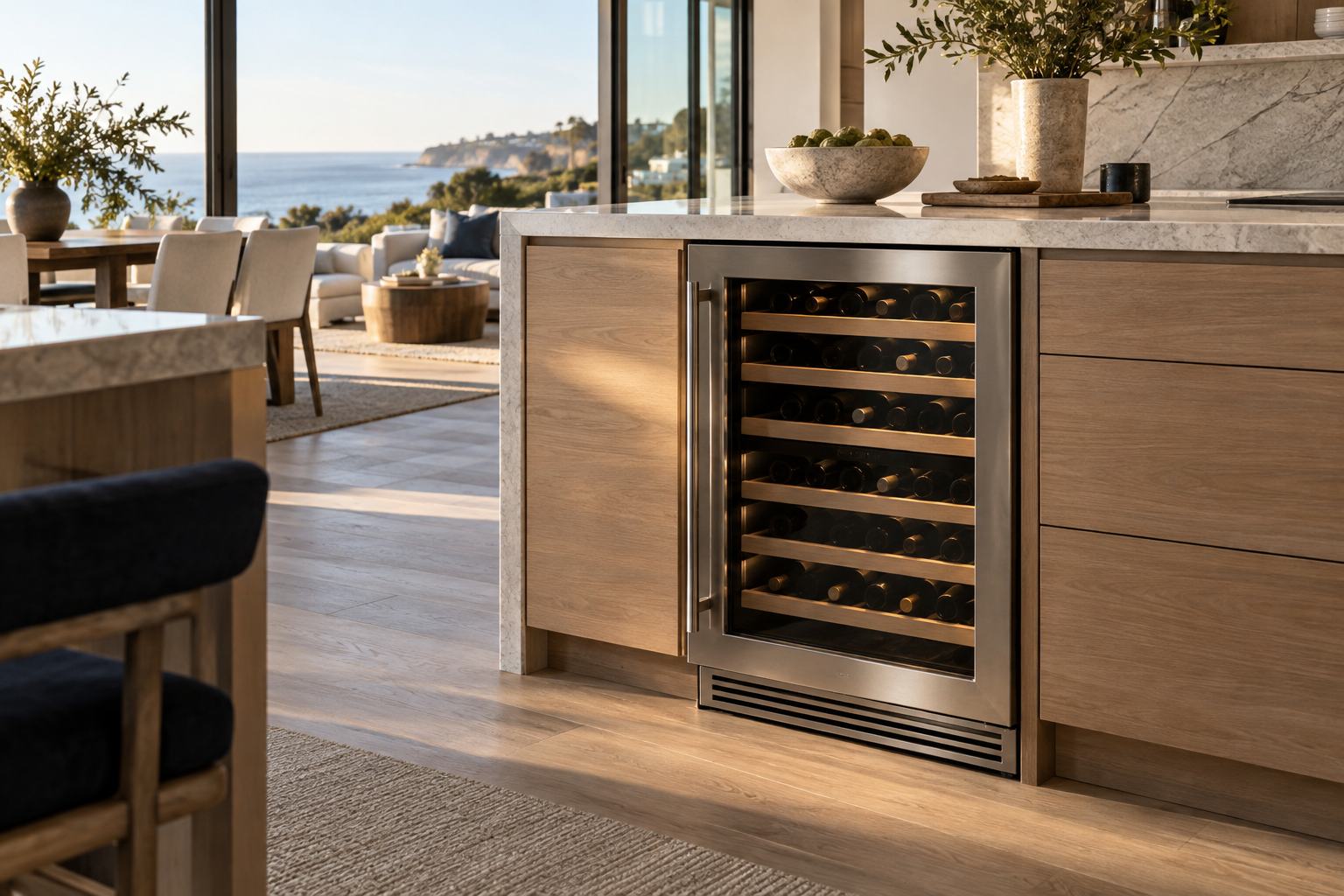
Sub-Zero wine cabinets
Sub-Zero wine storage - from the legacy 400 Series to today's built-in and undercounter units - protects bottles with dual evaporators and the same EC code dialect as the brand's refrigeration. The codes are official, published per series, and most begin with the same suspect: airflow.
A photo of the model label and the complete installation helps the team understand the configuration before the visit.
30-inch built-in wine units with dual storage zones and UV-resistant glass.
Integrated, panel-ready wine storage in the Designer (formerly Integrated) line.
24-inch undercounter wine storage with its own official EC 10 documentation.
424, 427, 430 and 461 units - the classic Sub-Zero cellars, still widely installed.
Start with the symptom
A symptom narrows the inspection; it does not identify the failed component. The $99 visit confirms the actual fault on the exact model before any repair is authorized.
The EC 10 pattern: airflow, gasket and condenser before the sealed system.
Dampers and zone sensors on dual-evaporator units - a documented path.
Coastal humidity versus door seal - persistent condensation risks labels.
Condenser dust is the usual thief; EC 40/50 confirms it in the log.
Compressor mounts and shelf contact - sediment-sensitive collections deserve quiet.
The 400 Series has its own official code documentation and parts path - age is not a verdict.
Series and model numbers
Sub-Zero documents wine-storage EC codes per series - 400 Series, BW built-ins and UW undercounters each have their own official pages, and the model prefix decides which applies.
Model label
On most Sub-Zero wine units the serial tag is inside the compartment - typically on an interior side wall near the top, sometimes behind the top shelf or drawer. Photograph the full tag with the bottles' zone display. Photograph the complete label — the full model and serial identify parts and production year better than the series name alone.
Indicators and alerts
For any message not shown, use the manual for the exact model rather than a generic list.
Sub-Zero diagnostics
Every code above has a dedicated official Sub-Zero support page for wine storage (400 Series, BW or UW). Sub-Zero publishes wine codes per series, and this page respects those boundaries instead of borrowing refrigerator folklore.
Preventive service and owner care
Alpha Pro provides preventive and general maintenance for Sub-Zero wine cabinets. The appliance design determines which procedures are accessible and appropriate.
Owner maintenance
Professional maintenance
A professional visit can evaluate accessible systems without assuming every procedure applies to every model.
Diagnosis before parts
Call or book with the model label, exact behavior, any displayed codes, photos, and access notes.
The technician examines the reported condition in context: zone temperatures, cooling behavior, humidity, door seal, controls, and relevant components.
Findings and proposed work are explained before repair proceeds. The residential diagnostic is credited toward an approved repair.
Service area and operating context
From established west-side streets to Otay Ranch's new communities, Chula Vista runs every appliance generation - big families, big laundry loads and builder suites hitting their first repairs.
South Bay and East County bring summer heat, hard water and hard-working family appliances - practical repairs with strong parts availability are the local priority.
During maintenance, accessible metal surfaces can be inspected for corrosion, moisture exposure, or conditions that may warrant attention. Location alone does not establish the cause of a failure.
A better repair decision
There is no honest universal age or price threshold. Start with the exact model and a diagnosis.
Local notes · Chula Vista
About a third of Chula Vista's homes were built in 2000 or later, much of that in Eastlake, Otay Ranch, Millenia and Rolling Hills Ranch. Kitchens from that period often put a Sub-Zero undercounter wine unit in the island or a panel-ready column beside the refrigerator. Many of those units are now well into their second decade and past their original coverage. Undercounter models breathe through a toe-kick at floor level, in kitchens that serve households averaging about three people. That mix of age, airflow and daily traffic drives most of what we fix here.
Chula Vista is gentler than inland San Diego County. The NOAA station's August mean daily high is 76.9°F, which a wine unit handles comfortably, and heat alarms are less common here than in the valleys. September is the exception. The month's hottest day averages 92.4°F and the station record is 103°F, so a kitchen without air conditioning can briefly pass the 90°F room limit Sub-Zero gives for its wine storage. Humidity is the steadier factor. Weather Spark counts about 4.2 muggy days in August, more than inland areas see, and near the bay the air stays damp. Humid air against a cold glass door means fogging, and a gasket that has stopped sealing lets moisture in to collect as water on the cabinet floor. Floor level matters as well. An undercounter unit pulls condenser air at the toe-kick, which in a busy household gathers crumbs, lint and pet hair. The east side also borders open hills. The 2007 Harris Fire approached eastern Chula Vista, and smoke events like that leave fine ash on anything that moves air, condenser fins included.
Symptom: Fog on the door, droplets on bottles, or water pooling on the cabinet floor or under the unit. Cause: Humid bay air meeting cold glass, a gasket that no longer seals, a door held open by an overfilled rack, or a clogged drain path. Fix: We check the gasket and door alignment, clear the drain, and replace the seal where it is torn or flattened.
Symptom: The compressor seems to run constantly and the zone sits a few degrees above setpoint. Cause: A toe-kick condenser matted with lint and pet hair, or on some Designer Undercounter units, a refrigerant charge that Sub-Zero says may need adjustment. Fix: We clean the condenser at the toe-kick, measure airflow, and correct the charge only when testing confirms it's off.
Symptom: One zone drifts warm or cold, or its displayed temperature jumps around while the other zone stays steady. Cause: A worn evaporator or condenser fan motor, or a failing temperature sensor, both listed by Sub-Zero among the main causes of warm wine zones. Fix: We check fan operation and sensor readings for that zone, then replace whichever part has failed.
Symptom: The panel sags, the door won't swing shut by itself, or the seal gaps at one corner. Cause: Years of daily use in a busy kitchen, sometimes with a decorative front that outweighs what the hinge was specified to carry. Fix: We adjust or replace the hinge hardware and realign the panel so the gasket seals evenly all the way around.
Floor-level airflow comes first. Vacuum the toe-kick grille whenever you do the kitchen floors, and clean the condenser behind it at least every three months if pets live in the home. Keep step stools, bins and grocery bags away from the grille. Wipe the door gasket with mild soap and check that it grips the frame all the way around. On muggy summer days, keep door openings short, since each one lets damp air in. Before September arrives, confirm both zones hold their setpoints.
Many east-side communities have HOA parking rules and some have gates, so pass along entry details when you book. For an undercounter unit, clear the floor in front of the island or cabinet so we can reach the toe-kick. Note which zone is off and what it reads, and take a photo of the display and the model tag. If it's a column, tell us whether it's single- or dual-zone. We'll let you know in advance if any bottles need to come out for access.
A Sub-Zero wine unit from the east-side build-out is usually worth repairing. Fans, sensors, gaskets and hinges are modest jobs, while replacing an undercounter model or column means matching the opening and the panel. If the cabinet liner is cracked or the sealed system has leaked more than once, a new unit may make more sense. Our $99 diagnostic, credited toward the repair, gives you the facts before you decide.
Helpful answers
Clear preparation makes a service request easier to evaluate.
Yes - same-day windows are offered across San Diego County subject to the day's schedule. Availability is confirmed for the exact address when you book.
We take requests across Chula Vista (ZIP 91910, 91911, 91913-91915). Share gate codes, parking or building access when booking so the technician can plan the visit.
Yes. It is non-refundable and credited toward the total repair cost if you proceed. There are no residential exceptions.
A 90-day labor warranty and a 1-year parts warranty, both starting on the date the repair is completed.
No. A symptom narrows the search, but the diagnostic visit on the exact model confirms the actual fault before any repair is authorized.
A zone ran too warm. Sub-Zero's official path: check ambient (60-90 degrees F is the design window), run the warm-unit checks, then a 30-second breaker reset. A returning EC 10 is a service visit.
Short excursions rarely harm wine - track the zone display and keep the door closed. Inventory-risk calls get same-day priority.
Yes - 424, 427, 430 and 461 units have official code documentation and a known parts path; the serial confirms availability.
Inside the compartment, typically on a side wall near the top or behind the top shelf. Photograph the full tag.
Yes - with EPA-certified refrigerant handling, after airflow, gaskets and condenser are honestly ruled out first.
Moisture that slips in through a leaky seal or an open door condenses on cold surfaces and should drain away. If the drain is blocked, water collects on the cabinet floor and can damage labels or start mold. Make sure the door seals fully, then call us if pooling continues.
Some run time is normal, but constant running with a zone above setpoint isn't. The most common reason is a clogged toe-kick condenser. Clean it and give the unit a day. If nothing changes, a fan, sensor or refrigerant charge problem is likely and worth a diagnosis.
Occasionally. Most of the year the city is mild, but the hottest September day averages about 92°F and the station record is 103°F. A kitchen without cooling can briefly pass the 90°F room limit Sub-Zero specifies, and warm alarms follow. Temperatures normally recover once the room cools.
Yes. Dog and cat hair drifts along the floor and gets pulled into the toe-kick intake of undercounter models, where it mats on the condenser. That slows heat removal and makes the compressor run longer. Homes with pets should clean the condenser about every three months.
Repair and preventive care
Schedule help for an active problem or arrange preventive maintenance for the appliance.
We are ready to help with your appliance repair needs.
Call Us
(619) 877-6701Visits by appointment
11364 Nawa Way,Business Hours
Email Us
Email us