

BW-30 class wine storage
30-inch built-in wine units with dual storage zones and UV-resistant glass.
Sub-Zero service · Poway
Same-day Sub-Zero wine cooler repair in Poway, Mon–Sat 7 AM–6 PM. $99 service call, credited to the repair. 3-month labor / 1-year parts warranty. Licensed (A51423) and insured up to $1M. Family-owned and run by Viktor, owner and lead technician. Rated 5.0★ from 490 Google reviews. Call (619) 877-6701.
$99 service call, credited · Same-day service Mon–Sat · Approval before work · License A51423 · EPA-certified technicians · Insured up to $1M
The diagnostic fee is non-refundable and credited toward the total repair cost when you proceed.
Commercial service visits are priced separately at $150.
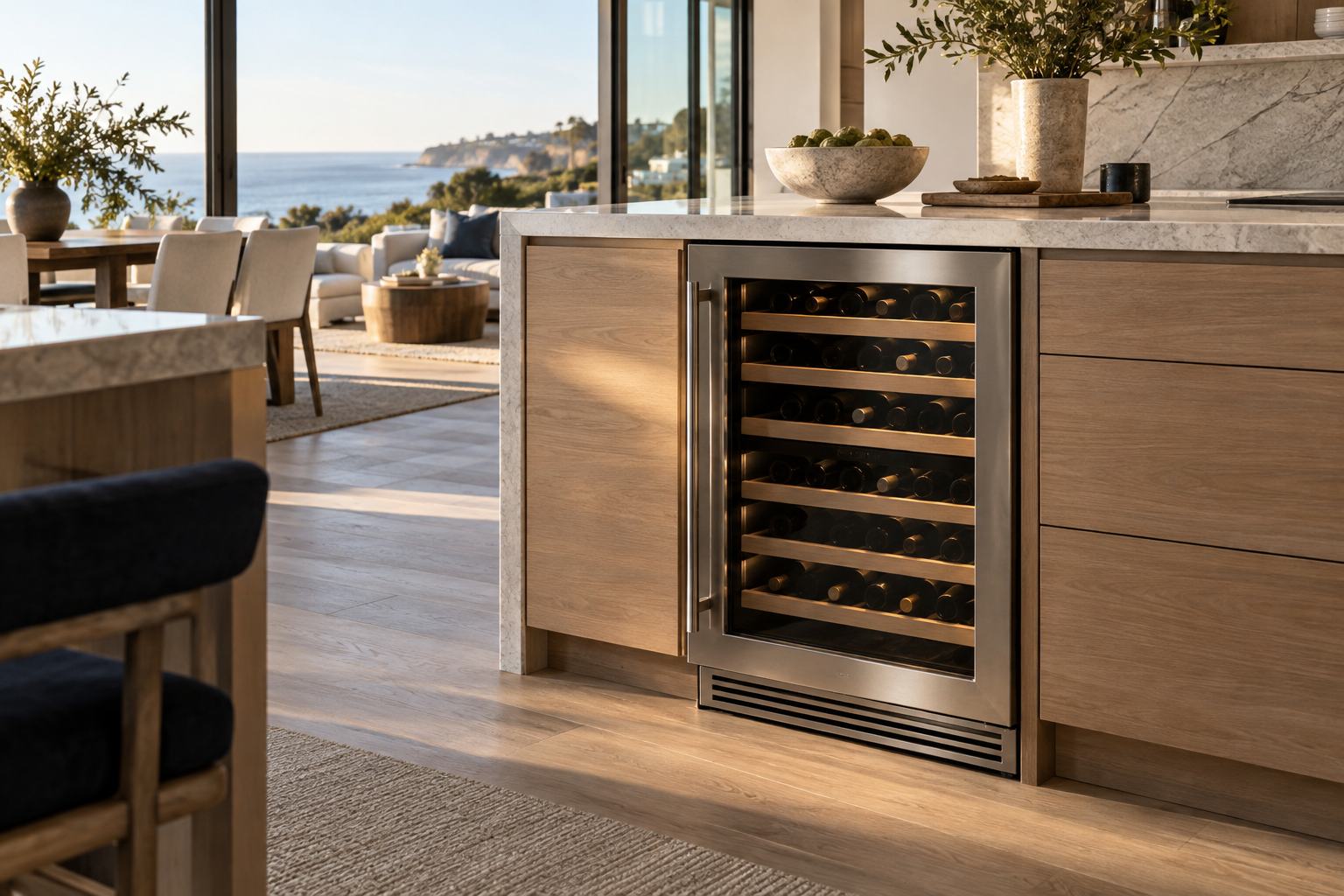
Sub-Zero wine cabinets
Sub-Zero wine storage - from the legacy 400 Series to today's built-in and undercounter units - protects bottles with dual evaporators and the same EC code dialect as the brand's refrigeration. The codes are official, published per series, and most begin with the same suspect: airflow.
A photo of the model label and the complete installation helps the team understand the configuration before the visit.
30-inch built-in wine units with dual storage zones and UV-resistant glass.
Integrated, panel-ready wine storage in the Designer (formerly Integrated) line.
24-inch undercounter wine storage with its own official EC 10 documentation.
424, 427, 430 and 461 units - the classic Sub-Zero cellars, still widely installed.
Start with the symptom
A symptom narrows the inspection; it does not identify the failed component. The $99 visit confirms the actual fault on the exact model before any repair is authorized.
The EC 10 pattern: airflow, gasket and condenser before the sealed system.
Dampers and zone sensors on dual-evaporator units - a documented path.
Coastal humidity versus door seal - persistent condensation risks labels.
Condenser dust is the usual thief; EC 40/50 confirms it in the log.
Compressor mounts and shelf contact - sediment-sensitive collections deserve quiet.
The 400 Series has its own official code documentation and parts path - age is not a verdict.
Series and model numbers
Sub-Zero documents wine-storage EC codes per series - 400 Series, BW built-ins and UW undercounters each have their own official pages, and the model prefix decides which applies.
Model label
On most Sub-Zero wine units the serial tag is inside the compartment - typically on an interior side wall near the top, sometimes behind the top shelf or drawer. Photograph the full tag with the bottles' zone display. Photograph the complete label — the full model and serial identify parts and production year better than the series name alone.
Indicators and alerts
For any message not shown, use the manual for the exact model rather than a generic list.
Sub-Zero diagnostics
Every code above has a dedicated official Sub-Zero support page for wine storage (400 Series, BW or UW). Sub-Zero publishes wine codes per series, and this page respects those boundaries instead of borrowing refrigerator folklore.
Preventive service and owner care
Alpha Pro provides preventive and general maintenance for Sub-Zero wine cabinets. The appliance design determines which procedures are accessible and appropriate.
Owner maintenance
Professional maintenance
A professional visit can evaluate accessible systems without assuming every procedure applies to every model.
Diagnosis before parts
Call or book with the model label, exact behavior, any displayed codes, photos, and access notes.
The technician examines the reported condition in context: zone temperatures, cooling behavior, humidity, door seal, controls, and relevant components.
Findings and proposed work are explained before repair proceeds. The residential diagnostic is credited toward an approved repair.
Service area and operating context
Poway sits in the hills off I-15 - ranch properties of Old Poway, gated Green Valley, newer streets off Espola Road. Garage refrigerators fight summer heat, canyon dust clogs condensers, and hard water leaves scale in ice makers and washer valves.
Inland heat and hard water set the pattern here: garage refrigerators work hardest in summer, dust clogs condensers, and scale builds in ice makers, dishwashers and washer valves.
During maintenance, accessible metal surfaces can be inspected for corrosion, moisture exposure, or conditions that may warrant attention. Location alone does not establish the cause of a failure.
A better repair decision
There is no honest universal age or price threshold. Start with the exact model and a diagnosis.
Local notes · Poway
Poway's hot season runs from about July 1 to late September, and for a Sub-Zero wine unit the key question is simple: how warm does the room get? Sub-Zero rates its 400-series wine storage for surroundings between 60°F and 90°F. In large family homes, wine storage often ends up in a garage bar, a game room over the garage or a sunny addition, and those spaces can top 90°F on a hot afternoon. Dust from horse trails and arenas adds to the strain. We repair Sub-Zero columns and undercounter units from Green Valley to Old Coach Estates.
Poway's average August high is about 84°F, and it's a dry heat, with muggy days rare. In an air-conditioned kitchen that is easy work for a wine unit. The trouble is where many units end up. About 39% of Poway homes have four bedrooms and roughly 69% were built between 1970 and 1999, so many have attached garages and later additions where owners put a bar or wine wall. Garages and west-facing rooms heat up much faster than the rest of the house. Once the room passes Sub-Zero's 90°F limit, the unit can alarm with nothing broken. Dust is the second factor. Poway has more than 78 miles of trails where horses have priority, and fine dust, hay bits and pet hair drift in through open doors and settle near the floor, exactly where undercounter models pull condenser air through the toe-kick. Santa Ana winds from September to April, strongest inland, push in more. Ash is the third. Large parts of the city were evacuated in the 2003 Cedar and 2007 Witch Creek fires, and smoke events coat condenser fins with fine particles.
Symptom: On hot afternoons a 400-series unit flashes EC 10 or EC 12, then recovers overnight as the room cools. Cause: The surrounding space has gone past 90°F, outside the range Sub-Zero specifies, so the unit can't reject enough heat. Fix: We measure room and cabinet temperatures, clean the condenser, and advise on relocating or cooling the space. If it alarms in a cool room, we test fans, sensors and charge.
Symptom: The compressor runs long and loud, the zone sits a few degrees warm, and the grille looks gray. Cause: Arena dust, hay debris and pet hair drawn in at floor level coat the fins and the fan blade. Fix: We clean the condenser and blade, check the fan motor, and confirm airflow at the toe-kick before and after the work.
Symptom: A grinding or rattling fan, or one that won't spin, with a hot compressor area behind the grille. Cause: Hot rooms and dusty air shorten bearing life on fans that run for long stretches through the summer. Fix: We replace the motor, clean the coil, and verify the compressor wasn't overstressed while the fan was failing.
Symptom: Wine seems too warm or too cold on an older unit with a numbered dial and no display. Cause: The dial may have been bumped out of Sub-Zero's recommended 4 to 6 range, where 1 is warmest and 10 coldest. Fix: We reset the dial, measure rack temperatures over a full cycle, and diagnose further only if readings stay off.
Two habits matter most here: watching room temperature and keeping the condenser clean. Put a thermometer near any wine unit in a garage or bonus room and check it on the hottest days from July through September. If it passes 90°F, move the unit or cool the space. Clean the condenser every three months, in line with Sub-Zero's warm-unit checklist, or monthly on horse properties during windy stretches. Use a soft brush and a vacuum, never water or sprays.
Tell us where the unit sits: kitchen, garage bar or an upstairs room, since heat and access differ for each. For homes on larger lots, gated drives or dirt roads, send directions and the gate code. Please secure dogs and keep horses clear of the driveway and gate. Note the zone readings and any code, and if the problem only shows up in the afternoon, say so, because that points us toward room heat. A photo of the model tag lets us check parts before we arrive.
Poway adds a third option. If the unit is healthy but the room is too hot, the right answer may be moving it or cooling the space, not buying a new unit. For true failures, fans, sensors and gaskets are sensible repairs, and sealed-system work is usually justified on a built-in column. An older 1990s unit with a failed compressor deserves a closer look before you commit. Our $99 diagnostic is credited toward the repair.
Helpful answers
Clear preparation makes a service request easier to evaluate.
Yes - same-day windows are offered across San Diego County subject to the day's schedule. Availability is confirmed for the exact address when you book.
We take requests across Poway (ZIP 92064, 92074). Share gate codes, parking or building access when booking so the technician can plan the visit.
Yes. It is non-refundable and credited toward the total repair cost if you proceed. There are no residential exceptions.
A 90-day labor warranty and a 1-year parts warranty, both starting on the date the repair is completed.
No. A symptom narrows the search, but the diagnostic visit on the exact model confirms the actual fault before any repair is authorized.
A zone ran too warm. Sub-Zero's official path: check ambient (60-90 degrees F is the design window), run the warm-unit checks, then a 30-second breaker reset. A returning EC 10 is a service visit.
Short excursions rarely harm wine - track the zone display and keep the door closed. Inventory-risk calls get same-day priority.
Yes - 424, 427, 430 and 461 units have official code documentation and a known parts path; the serial confirms availability.
Inside the compartment, typically on a side wall near the top or behind the top shelf. Photograph the full tag.
Yes - with EPA-certified refrigerant handling, after airflow, gaskets and condenser are honestly ruled out first.
Probably not. If the alarm clears as the evening cools, the room is likely passing the 90°F limit Sub-Zero sets for its wine storage. Measure the room at the hottest part of the day. If it stays under 90°F and the alarm still appears, a fan, sensor or the sealed system needs testing.
Only if the garage stays between 60°F and 90°F. Poway's hot season runs roughly July through September, and an uninsulated garage can pass 90°F on many of those afternoons. Insulating and cooling the space, or moving the unit indoors, protects both the compressor and the wine.
Fine dust and hay particles drift through open doors and settle near the floor, right where undercounter units take in condenser air. A coated condenser holds heat, so the unit runs longer and louder. On horse properties, brushing the toe-kick condenser monthly during windy periods keeps it breathing.
Sub-Zero recommends 4 to 6 on dial-controlled wine storage, where 1 is warmest and 10 is coldest. Change the setting one step at a time and give it a day to settle before rechecking. If readings don't move with the dial, the unit needs a diagnosis.
Repair and preventive care
Schedule help for an active problem or arrange preventive maintenance for the appliance.
We are ready to help with your appliance repair needs.
Call Us
(619) 877-6701Visits by appointment
11364 Nawa Way,Business Hours
Email Us
Email us