

TWC-15 / TWC-24
15 and 24-inch undercounter wine cabinets.
True service · Chula Vista
Same-day True wine cooler repair in Chula Vista, Mon–Sat 7 AM–6 PM. $99 service call, credited to the repair. 90-day labor / 1-year parts warranty. Licensed (A51423) and insured up to $1M. Family-owned and run by Viktor, owner and lead technician. Rated 5.0★ from 490 Google reviews. Call (619) 877-6701.
$99 service call, credited · Same-day service Mon–Sat · Approval before work · License A51423 · EPA-certified technicians · Insured up to $1M
The diagnostic fee is non-refundable and credited toward the total repair cost when you proceed.
Commercial service visits are priced separately at $150.
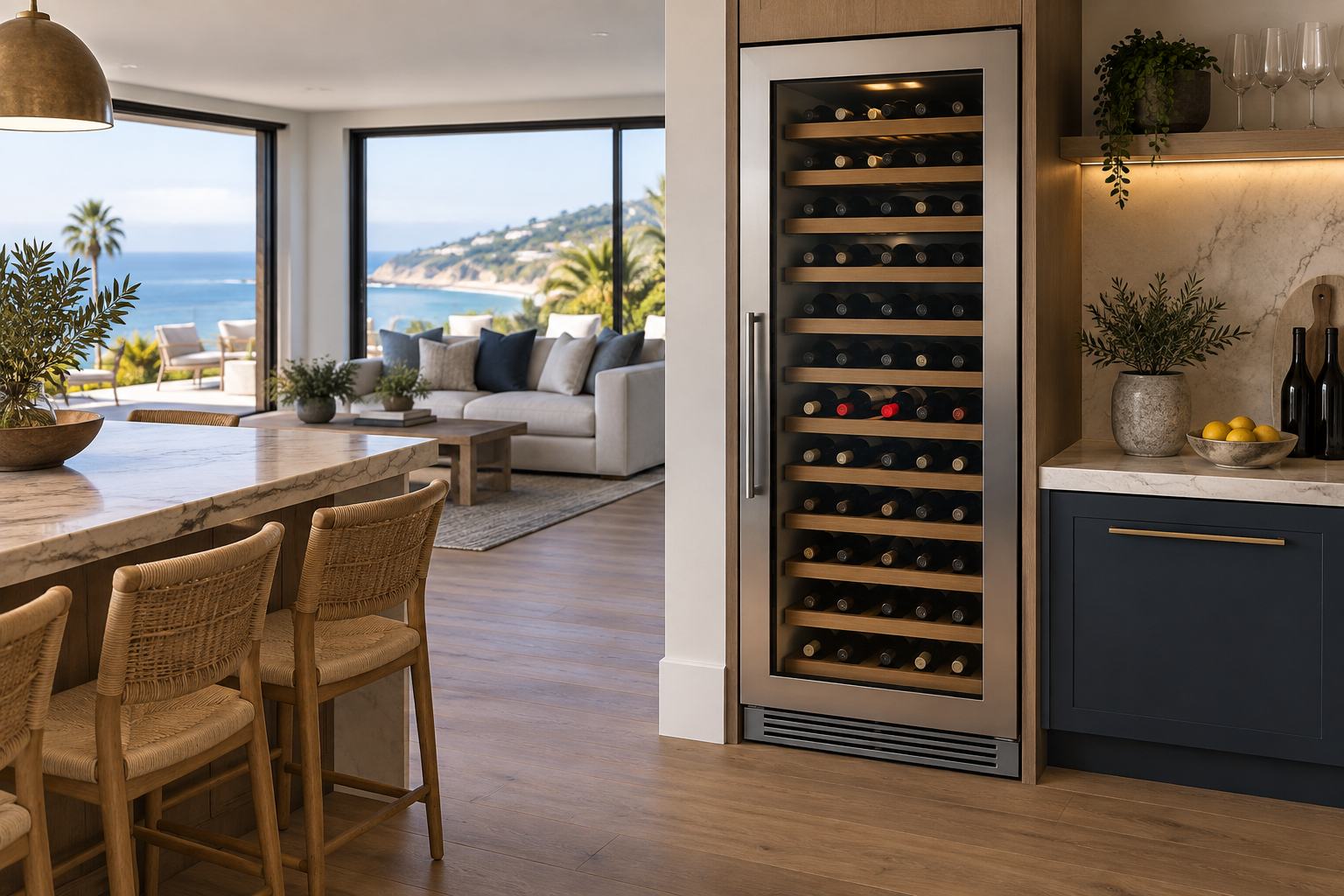
True wine cabinets
True wine cabinets run the same forced-air, stainless-interior platform as the brand's refrigerators - with wine-specific alarm thresholds. The control flags an hour above 70°F, and dual-zone models watch each zone separately.
A photo of the model label and the complete installation helps the team understand the configuration before the visit.
15 and 24-inch undercounter wine cabinets.
24-inch dual-zone cabinet - independent zone probes and alarms.
24, 30 and 36-inch dual-zone wine columns.
Undercounter wine units share the outdoor rating of the platform.
Start with the symptom
A symptom narrows the inspection; it does not identify the failed component. The $99 visit confirms the actual fault on the exact model before any repair is authorized.
The 70°F alarm pattern - condenser dust and door seal before anything expensive.
Zone probe or damper territory - documented and repairable.
Humidity versus door heater; persistent sweating risks labels.
Compressor mounts and shelf contact - sediment-sensitive collections deserve quiet.
Forced-air systems breathe through the front - kickplate airflow is checked first.
A large warm load can legitimately trip the alarm - the history tells the difference.
Series and model numbers
Wine models share the True control platform - dual-zone units simply duplicate the probes and alarms per zone.
Model label
The gray serial tag is on the interior wall, top left - photograph it whole; revision letters route parts. Photograph the complete label — the full model and serial identify parts and production year better than the series name alone.
Indicators and alerts
For any message not shown, use the manual for the exact model rather than a generic list.
True diagnostics
True wine cabinets use the same plain-language status dialect as the rest of True Residential - no numeric codes exist, per the official service manual. Wine-specific thresholds (70°F alarm) are built into the same control.
Preventive service and owner care
Alpha Pro provides preventive and general maintenance for True wine cabinets. The appliance design determines which procedures are accessible and appropriate.
Owner maintenance
Professional maintenance
A professional visit can evaluate accessible systems without assuming every procedure applies to every model.
Diagnosis before parts
Call or book with the model label, exact behavior, any displayed codes, photos, and access notes.
The technician examines the reported condition in context: zone temperatures, cooling behavior, humidity, door seal, controls, and relevant components.
Findings and proposed work are explained before repair proceeds. The residential diagnostic is credited toward an approved repair.
Service area and operating context
From established west-side streets to Otay Ranch's new communities, Chula Vista runs every appliance generation - big families, big laundry loads and builder suites hitting their first repairs.
South Bay and East County bring summer heat, hard water and hard-working family appliances - practical repairs with strong parts availability are the local priority.
During maintenance, accessible metal surfaces can be inspected for corrosion, moisture exposure, or conditions that may warrant attention. Location alone does not establish the cause of a failure.
A better repair decision
There is no honest universal age or price threshold. Start with the exact model and a diagnosis.
Local notes · Chula Vista
About a third of Chula Vista's homes went up in 2000 or later, many in Eastlake, Otay Ranch, Millenia and Rolling Hills Ranch. Kitchens and home bars from that building wave often included a built-in wine unit, and many of those have now aged past their original warranty. True's residential line, True Caliber, includes wine cabinets built with the same commercial mindset as its refrigerators. When one starts to misbehave here, the complaint is usually about zones: reds running cold, whites running warm, or both drifting on hot September afternoons.
A dual-zone wine cabinet splits its interior in two. Whites typically sit around 46 to 56 degrees and reds around 58 to 68, and each zone relies on its own sensor, fan and control logic. Chula Vista's weather puts those parts under uneven stress. The August mean high near the bay is only about 77 degrees, but September is the city's warm month, with a mean monthly maximum around 92 and a record of 103. On those days the compressor runs longer, and a zone fan or sensor that is starting to fail shows itself. The bay side also stays more humid than inland areas, with a few muggy days each August. Warm, moist air that slips past a tired gasket condenses inside and can pool below the racks. Many newer homes put the wine unit in a kitchen island or bar run, where it breathes through a front grille at floor level. Dust, a rug or a toe-kick panel pushed too close can starve it of air. If a unit was ever swapped during a remodel, check that it is designed for built-in use. A freestanding unit boxed into cabinetry recirculates its own hot exhaust and overheats.
Symptom: One zone reads several degrees off, or temperatures swing through the day and settle at night. Cause: A weakening zone fan, a temperature sensor out of calibration, or a control fault. Fix: We check each sensor against a probe thermometer, test fan speed and control outputs, and replace the failed part.
Symptom: Compressor runs nearly nonstop, the cabinet front feels warm, and the unit can't hold temperature. Cause: Blocked or dusty front grille, or a unit not designed for built-in use trapped in cabinetry. Fix: We clean the grille and condenser and confirm the installation allows the unit to exhale. We'll tell you if the setup itself is the problem.
Symptom: Water under the bottom rack, drips on bottles, or a musty smell. Cause: A blocked drain, a worn gasket, or a door that doesn't fully close. Fix: We clear the drain path, replace the gasket if needed, and adjust the door so it seals evenly.
Symptom: Both zones warm up; the compressor is quiet or runs without cooling. Cause: A start relay or overload that has failed, or a leak or compressor fault in the sealed system. Fix: Start components are tested and replaced first. Sealed-system repairs are handled only by EPA-certified technicians.
The single best habit is watching the temperatures yourself. Put an inexpensive thermometer in each zone and glance at it weekly. If a zone moves more than a couple of degrees from its setting, call before it gets worse. Clean the front grille twice a year, and more often if pets shed near the bar. Before September, clear anything stacked against the toe-kick. Keep direct sun off the glass, since it heats the upper racks. Avoid changing setpoints often; each change forces a long recovery.
East-side communities often have HOA gates and visitor parking rules, so share access details when you book. Western neighborhoods usually have easier street parking. If the cabinet is warm, move your best bottles to a cool, dark closet. Write down the setpoints, what each thermometer reads, and when the problem started. Have the model and serial number from the rating label ready. If the unit sits inside an island, note whether the side or back panels come off, since some installs need that for access.
A True wine cabinet from the 2000s building boom may be well out of warranty but still worth repairing. Zone fans, sensors, gaskets and drains are low-to-moderate repairs. A compressor or leak is the major expense. Replacing a built-in also means finding a model that fits the opening and matches the cabinetry. After the $99 diagnostic, credited toward the work, we lay out both paths.
Helpful answers
Clear preparation makes a service request easier to evaluate.
Yes - same-day windows are offered across San Diego County subject to the day's schedule. Availability is confirmed for the exact address when you book.
We take requests across Chula Vista (ZIP 91910, 91911, 91913-91915). Share gate codes, parking or building access when booking so the technician can plan the visit.
Yes. It is non-refundable and credited toward the total repair cost if you proceed. There are no residential exceptions.
A 90-day labor warranty and a 1-year parts warranty, both starting on the date the repair is completed.
No. A symptom narrows the search, but the diagnostic visit on the exact model confirms the actual fault before any repair is authorized.
Short excursions rarely harm wine, but track the display and book promptly - the alarm means the zone spent an hour above 70°F.
Plain-language statuses only - zone probe failures, Refrigeration Error, Door Ajar. Numeric code lists online belong to True's commercial line.
Yes - each zone has its own probe and alarm, and the diagnosis is per-zone.
On the gray serial tag inside the cabinet, top left wall.
Undercounter models are UL outdoor-rated; the visit still verifies power, GFCI and ventilation - the usual outdoor failure points.
Common targets are about 46 to 56 degrees for whites and 58 to 68 for reds. For long-term aging, around 55 degrees with steady humidity is the usual goal. Check your owner's manual for the exact range of your model, and confirm with a thermometer rather than trusting the display alone.
September brings Chula Vista's hottest days, and the record there is 103 degrees. On those days the compressor runs longer, and any weak zone fan or dusty grille stops keeping up. Cleaning the grille before September and watching zone thermometers catches most problems early.
It can, if the unit isn't meant for built-in use. Built-in wine units vent through a front grille. A freestanding model placed in cabinetry traps its own heat, runs constantly and can wear out the compressor early. We can check the model and installation during a visit.
Often, yes. It usually means water is sitting somewhere it shouldn't, typically from a blocked drain or a leaking gasket. Humid air near the bay makes it more likely. Clearing the drain and fixing the seal usually solves it. Clean any mold off bottles and racks.
Repair and preventive care
Schedule help for an active problem or arrange preventive maintenance for the appliance.
We are ready to help with your appliance repair needs.
Call Us
(619) 877-6701Visits by appointment
11364 Nawa Way,Business Hours
Email Us
Email us