
JGRP 30-48 inch
Professional gas ranges (JGRP430, JGRP436, JGRP548) in RISE and NOIR expressions.
JennAir service · San Diego
JennAir ranges need a careful diagnosis. Share the model number, the exact symptom, and installation photos when you book.
Clear findings before repair · Appointment-based service · Approval before work · License A51423 · EPA-certified technicians · Insured up to $1M
The diagnostic fee is non-refundable and credited toward the total repair cost when you proceed.
Commercial service visits are priced separately at $150.
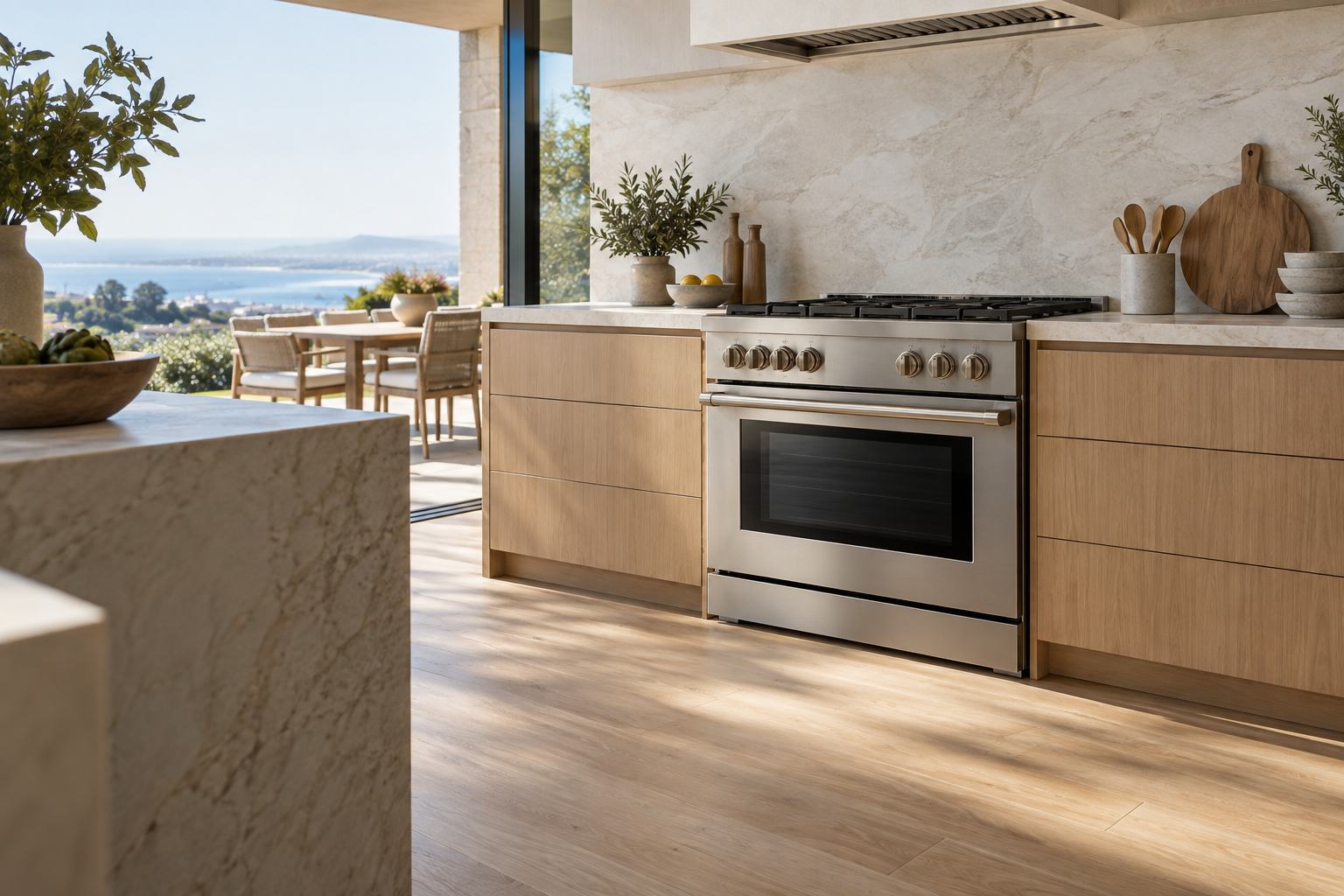
JennAir ranges
JennAir professional ranges - RISE and NOIR gas and dual-fuel, 30 to 48 inches - carry a quirk JennAir documents itself: F2E1 can mean nothing more than a grate sitting wrong over the burner deck, before it means a keypad or control fault. That is the level of specificity we hold every code to.
A photo of the model label and the complete installation helps the team understand the configuration before the visit.
Professional gas ranges (JGRP430, JGRP436, JGRP548) in RISE and NOIR expressions.
Gas tops over electric convection ovens - JDRP430 through the 48-inch JDRP548 with griddle.
Electric and induction slide-ins sharing the wall-oven control dialect.
The classic downdraft ranges - still installed, still serviced, grill carts and all.
Start with the symptom
A symptom narrows the inspection; it does not identify the failed component. The $99 visit confirms the actual fault on the exact model before any repair is authorized.
Electrodes, spark module and moisture after cleaning - the pro-range classics.
Sensor measured against reference on dual-fuel electric cavities.
The 48-inch chrome griddle has its own element and sensing.
Thermal cutout and door lock on electric cavities - the documented pair.
Legacy downdraft ranges: blower, damper and duct - all serviceable.
Bearing wear is audible before it is fatal - worth catching early.
Series and model numbers
Burner deck by fuel, oven by code table - and the HL/HM suffix is just the jewelry. The plate decides the parts.
Model label
The model and serial plate is on the oven frame behind the door on pro ranges - some models repeat it behind the kickplate or under the burner box lid. Photograph the complete label — the full model and serial identify parts and production year better than the series name alone.
Indicators and alerts
For any message not shown, use the manual for the exact model rather than a generic list.
JennAir diagnostics
F2E1's grate quirk and F9E0's miswire meaning come from JennAir's own product-help pages. The deeper fault families on these ranges are indexed without public meanings and are read against service data on-site rather than guessed.
Preventive service and owner care
Alpha Pro provides preventive and general maintenance for JennAir ranges. The appliance design determines which procedures are accessible and appropriate.
Owner maintenance
Professional maintenance
A professional visit can evaluate accessible systems without assuming every procedure applies to every model.
Diagnosis before parts
Call or book with the model label, exact behavior, any displayed codes, photos, and access notes.
The technician examines the reported condition in context: ignition, flame quality, temperatures, elements, controls, door fit, and relevant components.
Findings and proposed work are explained before repair proceeds. The residential diagnostic is credited toward an approved repair.
Service areas and operating context
Alpha Pro serves JennAir ranges in communities including La Jolla, Del Mar, Rancho Santa Fe, Carmel Valley, Poway, and the full San Diego County footprint below — ZIP by ZIP. Installation and room conditions vary from the coast to inland homes.
Recurring condensation, marine exposure, ventilation limits, and visible corrosion can be useful details during repair or maintenance.
Share room conditions, recent heat events, ventilation restrictions, and when the symptom appears.
During maintenance, accessible metal surfaces can be inspected for corrosion, moisture exposure, or conditions that may warrant attention. Location alone does not establish the cause of a failure.
A better repair decision
There is no honest universal age or price threshold. Start with the exact model and a diagnosis.
Local notes · San Diego County
JennAir's range story starts with ventilation. In 1961 the Indianapolis company introduced the self-ventilated downdraft range, and that design stayed a brand signature through the Maytag years from 1982 and into Whirlpool ownership in 2006. Today's lineup centers on pro-style gas and dual-fuel ranges from 30 to 48 inches, alongside legacy downdraft models still cooking in older kitchens. We service both across the county, and this guide covers the platform, its codes, and how coast and inland conditions change what fails.
San Diego County stretches from more than 70 miles of Pacific coast over the mountains to the Anza-Borrego desert, and a range's ignition parts feel the difference. Near the coast, the marine layer keeps mornings damp from May through August. Salt carried on that air corrodes spark electrodes, steel burner bases and knob-switch contacts, which is why coastal calls lean toward clicking and hard-starting burners. Inland valleys are hot and dry. El Cajon averages 88.6 degrees F on August afternoons, with the hottest days near 100 degrees F, and Santa Ana winds from September through April bring dust and single-digit humidity. There, dust in burner ports and heat around electronic controls matter more. Grid stress is shared county-wide; SDG&E hit a record 5,032 MW peak on Sept. 8, 2024, and power sags can disturb range controls. Housing adds variety, from coastal high-rise condos to post-war East County tracts and 2000s master-planned communities, so we see everything from 1990s downdrafts to recent pro-style ranges. Across all of it, gas safety is constant: SDG&E recommends a yearly gas appliance inspection and offers no-cost safety checks.
Symptom: The igniter glows dull, the bake burner lights late or not at all. Cause: Sears repair data for JennAir ovens not heating: igniter 63%, control board 15%, bake element 13%. The glow-bar is wired in series with the safety valve and must draw enough current to open it. Fix: Measure igniter amperage, not just continuity; replace igniter; check valve, breaker and gas shutoff.
Symptom: F3-1 with no heat or overshoot; F9-1 with a stuck or non-locking door. Cause: Whirlpool: F3-1 is the temperature sensor, control or wiring; F9-1 is the door latch, lock switch or wiring. Self-clean above 800 degrees F for 1.5 to 3 hours stresses both circuits. Fix: Power off for one minute; ohm-test sensor and harness; replace the lock motor or switch as diagnosed.
Symptom: Continuous clicking, clicking with knobs off, or spark without flame. Cause: Moisture after cleaning, a misaligned cap, a wet or failed knob switch, a cracked electrode, poor ground or a failing spark module. Fix: Dry and reseat caps; test switches, electrodes and module, and replace the faulty part.
Symptom: Smoke escapes on legacy or slide-in downdraft models. Cause: Grease-loaded filter, caked blower wheel, stuck damper, long or crushed duct. Fix: Clean filter and blower, free the damper, inspect the duct, replace the blower motor if slow. Grease buildup also raises fire risk. A duct check may need access below.
Keep burner ports and the oven igniter area free of debris, and dry burners completely after cleaning. Verify oven temperature with a thermometer when results change; a 15 F offset or more calls for calibration. Choose light-soil or steam clean over full self-clean where possible. Confirm the anti-tip bracket is engaged after any floor or cabinet work. And never line the oven bottom with foil or use the range to heat the home; CPSC warns both raise carbon monoxide risk.
Our technicians work from Oceanside and La Jolla to Poway and Chula Vista. Most range repairs happen on site with the range pulled forward, so clear the floor in front. We check gas connections visually and re-engage the anti-tip bracket before sliding it home. Please have the model and serial number, the code or symptom, and a video of the burner or display. If you smell gas or hear hissing, leave immediately and call SDG&E at 1-800-411-7343 or 9-1-1 from outside, then call us.
Igniters, elements, sensors, switches and door locks are routine and almost always worth repairing on a pro-style range. The typical replace trigger is a failed touch control or electronic range control on an older or discontinued model. Sears cites a gas range lifespan of about 15 years, a useful benchmark for age. Our $99 diagnostic is credited toward the repair.
Helpful answers
Clear preparation makes a service request easier to evaluate.
Yes - same-day windows are offered across San Diego County subject to the day's schedule. Availability is confirmed for the exact address when you book.
Yes. It is non-refundable and credited toward the total repair cost if you proceed. There are no residential exceptions.
A 90-day labor warranty and a 1-year parts warranty, both starting on the date the repair is completed.
No. A symptom narrows the search, but the diagnostic visit on the exact model confirms the actual fault before any repair is authorized.
JennAir's own documentation starts with the grates: seated wrong or rocking, they can trigger it. Reseat them cool and power-cycle; an F2E1 that survives is a keypad or control diagnosis.
Officially: the electrical connection is likely miswired - L2 and neutral are the named suspects. The wiring gets verified before any component is condemned.
On the oven frame behind the door - photograph the full plate including the serial.
Yes - the downdraft classics are widely installed and their blowers, elements and accessory carts remain serviceable.
No - HL and HM suffixes mark the design expression. The burners, ovens and controls beneath are common.
The cooking side is similar. The difference is the ventilation: a downdraft adds a filter, blower, damper and floor or cabinet duct. Weak draw is usually grease or ducting. We service those parts along with the burners and oven on the same visit.
JennAir uses Whirlpool's code system. F3-1 points to the oven sensor, control or wiring, and F9-1 to the door lock circuit. Messages such as PUSH, Loc or Lo/Pre are control prompts or status indicators rather than faults. Note the exact code for us.
Yes. Near the ocean, salt and damp air corrode ignition parts, so clicking and hard starts are common. Inland, dust clogs burner ports and heat stresses controls. The repair parts overlap, but our first checks differ by location. Tell us where the range is when you book.
Leave the home first. SDG&E says to shut gas at the meter only if you know or suspect a house-line leak and it is safe to do so. Once it is off, do not turn it back on yourself; SDG&E restores service and relights pilots.
Repair and preventive care
Schedule help for an active problem or arrange preventive maintenance for the appliance.
We are ready to help with your appliance repair needs.
Call Us
(619) 877-6701Visits by appointment
11364 Nawa Way,Business Hours
Email Us
[email protected]