
JUW24 undercounter
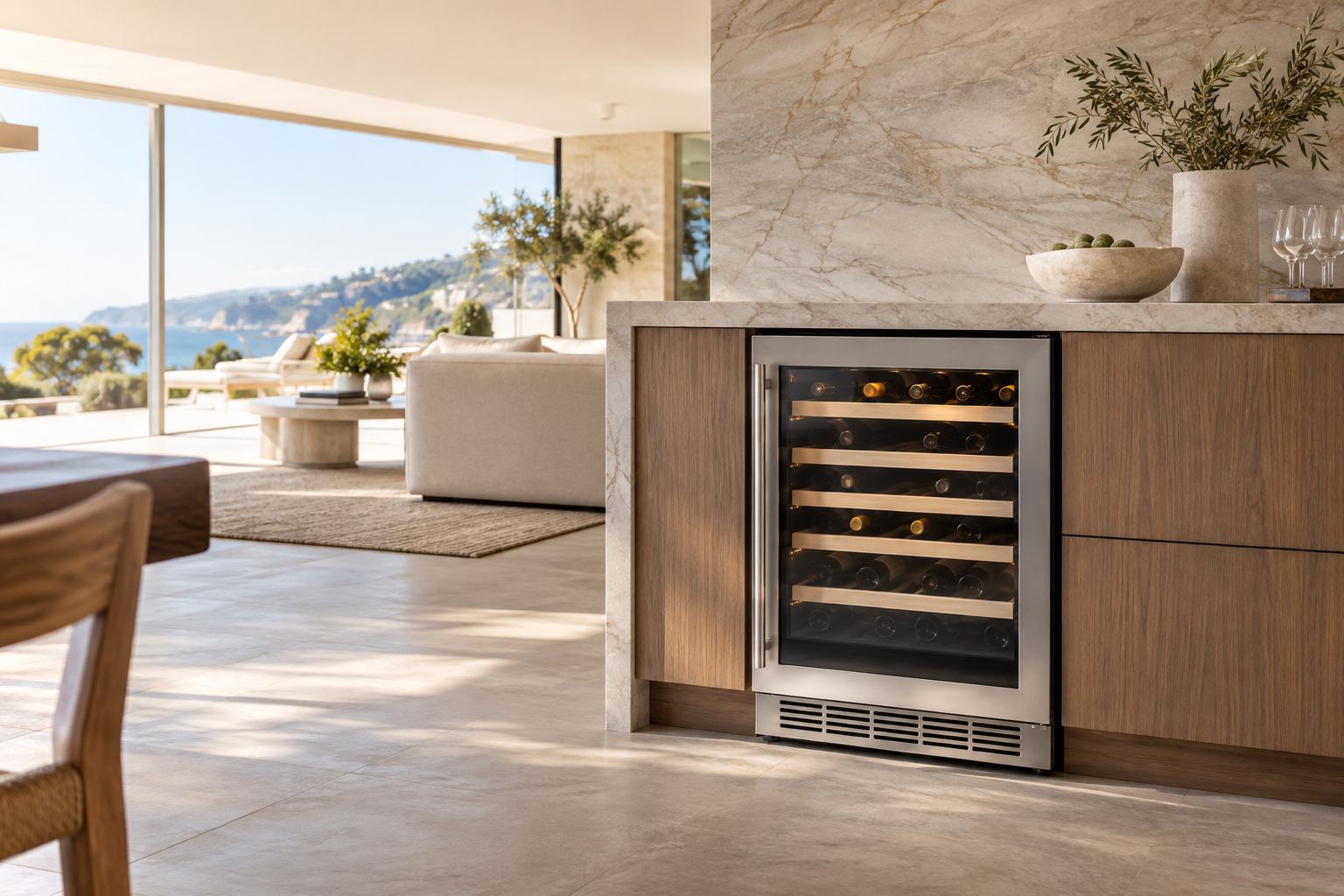
24-inch under-counter wine cellars, panel-ready and stainless, right or left hinge (JUW24FRECX, JUW24FLECX).
JennAir service · San Diego
JennAir wine cabinets need a careful diagnosis. Share the model number, the exact symptom, and installation photos when you book.
Clear findings before repair · Appointment-based service · Approval before work · License A51423 · EPA-certified technicians · Insured up to $1M
The diagnostic fee is non-refundable and credited toward the total repair cost when you proceed.
Commercial service visits are priced separately at $150.
JennAir wine cabinets
JennAir undercounter wine cellars - the 24-inch JUW models with dual temperature zones - watch their own cabinets: ten minutes above preset in either zone and the over-temperature alarm sounds, then keeps re-flagging every four hours until the cabinet recovers. The published codes are few and honest: E1, E2, HI and LO.
A photo of the model label and the complete installation helps the team understand the configuration before the visit.
24-inch under-counter wine cellars, panel-ready and stainless, right or left hinge (JUW24FRECX, JUW24FLECX).
Independent upper and lower zones - reds and whites at their own presets.
The documented 10-minute alarm with 4-hour re-flag - inventory protection by design.
Earlier undercounter wine units, still installed and serviced by platform.
Start with the symptom
A symptom narrows the inspection; it does not identify the failed component. The $99 visit confirms the actual fault on the exact model before any repair is authorized.
Door seal, condenser dust and front-vent airflow first - wine inventory gets priority scheduling.
Shared cooling and control territory - diagnosed, not guessed.
Humidity and gasket territory; persistent condensation risks labels and cabinetry.
Condenser and ventilation first, refrigerant charge after - undercounter units breathe through the front grille.
Compressor mounts and shelf contact - sediment-sensitive collections deserve quiet.
Power path and control - photograph before any reset.
Series and model numbers
Hinge side is in the model number and the zone layout is common - the plate inside the cabinet decides everything else.
Model label
The model and serial plate is inside the cabinet - on the interior wall or ceiling near the top of the compartment; slide the top shelf out to read it fully. Photograph the complete label — the full model and serial identify parts and production year better than the series name alone.
Indicators and alerts
For any message not shown, use the manual for the exact model rather than a generic list.
JennAir diagnostics
E1, E2, HI/LO and the over-temperature alarm behavior all come from JennAir's own product-help documentation - which declines to publish component-level decodes, and we say so. Sealed-system work on these units is performed with EPA-certified refrigerant handling.
Preventive service and owner care
Alpha Pro provides preventive and general maintenance for JennAir wine cabinets. The appliance design determines which procedures are accessible and appropriate.
Owner maintenance
Professional maintenance
A professional visit can evaluate accessible systems without assuming every procedure applies to every model.
Diagnosis before parts
Call or book with the model label, exact behavior, any displayed codes, photos, and access notes.
The technician examines the reported condition in context: zone temperatures, cooling behavior, humidity, door seal, controls, and relevant components.
Findings and proposed work are explained before repair proceeds. The residential diagnostic is credited toward an approved repair.
Service areas and operating context
Alpha Pro serves JennAir wine cabinets in communities including La Jolla, Del Mar, Rancho Santa Fe, Carmel Valley, Poway, and the full San Diego County footprint below — ZIP by ZIP. Installation and room conditions vary from the coast to inland homes.
Recurring condensation, marine exposure, ventilation limits, and visible corrosion can be useful details during repair or maintenance.
Share room conditions, recent heat events, ventilation restrictions, and when the symptom appears.
During maintenance, accessible metal surfaces can be inspected for corrosion, moisture exposure, or conditions that may warrant attention. Location alone does not establish the cause of a failure.
A better repair decision
There is no honest universal age or price threshold. Start with the exact model and a diagnosis.
Local notes · San Diego County
JennAir is Whirlpool Corporation's luxury built-in brand, and its wine storage follows that built-in approach. The lineup typically includes undercounter wine cellars, commonly 24 inches wide, and full-height built-in wine columns, with panel-ready options. These units are meant to sit flush in cabinetry, so they breathe through a front grille at the base. That design is the key to most service calls. In San Diego County, the grille faces salt-damp air on the coast and hot, dusty air inland, and both push a wine unit off its set point.
San Diego County stretches from more than 70 miles of coastline over the mountains to the desert, and a wine unit's environment changes with it. Near the ocean, the marine layer keeps air cool and damp from May through August. Coastal humidity means condensation on glass doors, extra strain on door seals, and salt film on condensers close to the surf. Five to fifteen miles inland the marine layer clears and heat takes over. El Cajon averages close to 89 degrees for an August high, and the hottest late-summer days reach about 100. A kitchen that warms up pushes a front-vent condenser hard, and JennAir says run time climbs beyond the typical 40 to 80 percent in warm rooms. Santa Ana winds, around ten days a year, bring dry, dusty air that collects on the condenser. Water hardness ranges from about 9 to 16 grains per gallon across the county's utilities, but most wine units have no water line, so the variation that matters is air temperature and cleanliness. Power matters too. On September 8, 2024, SDG&E set a record peak demand during a heat wave, and outages during hot spells can warm a collection quickly. City pages below cover local detail.
Symptom: Code on the display; cooling may stop. Cause: JennAir's help site directs a one-minute power-cycle first. It does not publish detailed meanings; persistent codes generally trace to a temperature sensor or the control. Fix: Power-cycle once. If the code returns, we test sensors and the control and replace the failed part.
Symptom: Display above set point; compressor runs long. Cause: JennAir names frequent door openings, a blocked base grille, installation behind cabinet doors and newly added warm bottles. Ambient below 55 degrees also causes trouble. Fix: Clear the vent path, allow hours to stabilize, then test fans, thermistors and the sealed system.
Symptom: Water on the glass or cabinet, drips at the floor. Cause: Humid coastal air, a worn gasket, a door out of alignment or a blocked drain. Fix: Replace the gasket, clear the drain and adjust the hinge so the door seals evenly along its full height.
Symptom: New hum or rattle and a gradual rise in temperature, typical of undercounter units. Cause: A failing condenser or evaporator fan motor, or dust on the condenser behind the grille. Fix: Clean the condenser, check the blade for debris, and replace the fan motor if its bearings are worn.
JennAir's guidance centers on airflow: keep the base grille clear and the condenser behind it clean. We suggest every six to twelve months as a baseline, moving toward six months on the coast and more often inland if pets, dust or trail dirt are part of the house. Inspect the door gasket at least once a year. Keep zones in sensible ranges; a common guide is 46 to 56 degrees for whites and 58 to 68 for reds, around 55 for aging. For second homes, add a remote temperature alarm.
We serve coastal condos, gated communities and inland ranch properties, so tell us about parking, elevator bookings, gate codes and animals when you book. Undercounter cellars may need to slide out; full-height columns need clear floor space in front. Remove bottles from the lower racks if you can. Have the model and serial number, a photo of the display and any code, and a note on which zone is affected. If the problem began after a heat wave or outage, mention it.
On built-in JennAir wine units, fan motors, sensors, gaskets and controls are worthwhile repairs. They are modest next to replacing a panel-ready unit and re-fitting it to the cabinetry. Premium built-ins, unlike low-cost thermoelectric coolers, are usually worth the repair. The exception is a sealed-system failure on an older undercounter model, where replacement often makes more sense. We also look at the installation, because a new unit in a blocked cabinet fails the same way. Our $99 diagnostic is credited toward the repair.
Helpful answers
Clear preparation makes a service request easier to evaluate.
Yes - same-day windows are offered across San Diego County subject to the day's schedule. Availability is confirmed for the exact address when you book.
Yes. It is non-refundable and credited toward the total repair cost if you proceed. There are no residential exceptions.
A 90-day labor warranty and a 1-year parts warranty, both starting on the date the repair is completed.
No. A symptom narrows the search, but the diagnostic visit on the exact model confirms the actual fault before any repair is authorized.
JennAir's official handling: power down for one minute and watch. An E1 that returns is a genuine service call - the component decode is technician-facing, and the visit tests the circuits directly.
Documented behavior: it flashes until you press Reset Alarm, so you know a warm event happened. If it re-flags every 4 hours, the zone is still warm and needs a look.
Short excursions rarely harm wine, but track the zone display. Inventory-risk calls get same-day priority.
Inside the cabinet, on the interior wall or ceiling near the top - slide the top shelf out and photograph the full plate.
Yes - with EPA-certified refrigerant handling. Airflow and gaskets are ruled out first, because they cause most warm-cabinet calls.
We service JennAir undercounter wine cellars and full-height built-in wine columns, including panel-ready units. Diagnosis covers cooling, fans, sensors, controls, door seals and drains. Share the model number when you book so we can check parts availability first and plan for the right access.
They are control fault codes. JennAir recommends cutting power for one minute and restoring it. If the code clears, keep watching temperatures. If it returns, a technician should test the temperature sensors and the control, which are the usual causes.
A front-vent condenser has to shed more heat into a warm room. Dust on the coil, a weak fan or a blocked grille shows up first on hot days. Inland homes see it most. Cleaning the condenser before summer usually prevents it, along with keeping the grille clear.
Low-cost thermoelectric units are often replaced rather than repaired beyond a fan, and they struggle in warm rooms, which makes them a poor fit for hot inland kitchens. Premium built-in units such as JennAir's are a different story; fans, sensors, gaskets and controls are routine, worthwhile repairs.
Repair and preventive care
Schedule help for an active problem or arrange preventive maintenance for the appliance.
We are ready to help with your appliance repair needs.
Call Us
(619) 877-6701Visits by appointment
11364 Nawa Way,Business Hours
Email Us
[email protected]