

CTS90 French-door
The Professional Series French-door single - True European Convection, hot-air frying, LCD touch controls.
Cafe service · Chula Vista
Same-day Cafe oven repair in Chula Vista, Mon–Sat 7 AM–6 PM. $99 service call, credited to the repair. 90-day labor / 1-year parts warranty. Licensed (A51423) and insured up to $1M. Family-owned and run by Viktor, owner and lead technician. Rated 5.0★ from 490 Google reviews. Call (619) 877-6701.
$99 service call, credited · Same-day service Mon–Sat · Approval before work · License A51423 · EPA-certified technicians · Insured up to $1M
The diagnostic fee is non-refundable and credited toward the total repair cost when you proceed.
Commercial service visits are priced separately at $150.
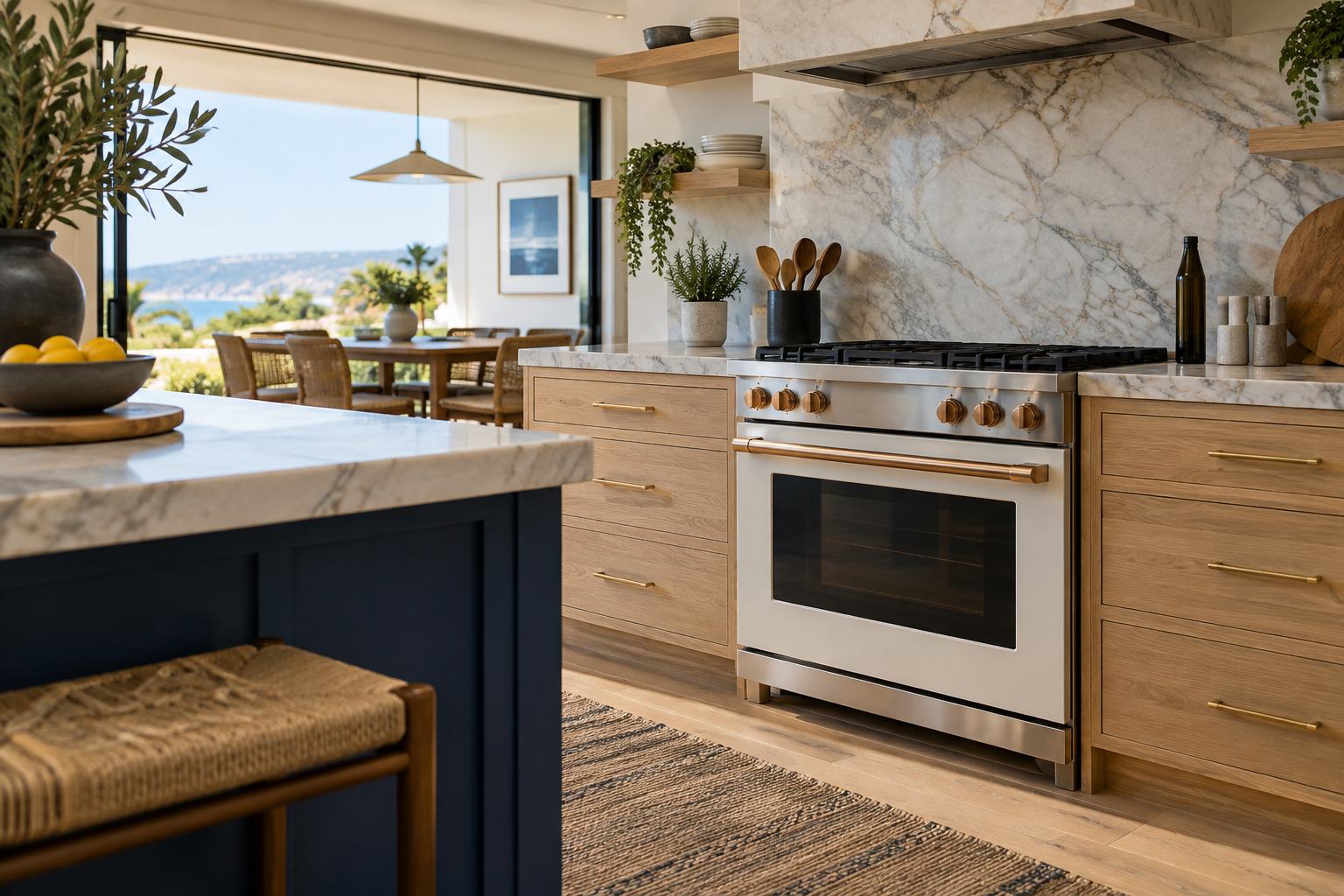
Cafe wall ovens
Café's wall ovens headline with the French-door CTS90 - both doors swinging open on a 5.0 cu ft convection cavity - alongside the conventional CTS70 singles and double-oven siblings. Behind the 7-inch touchscreens runs GE's documented F-code system: F2 for over-temperature, F3 and F4 for the sensor, F9 for the door lock, F350 for the cooling fan.
A photo of the model label and the complete installation helps the team understand the configuration before the visit.
The Professional Series French-door single - True European Convection, hot-air frying, LCD touch controls.
30-inch smart singles with convection and self-clean.
Café's double-cavity wall ovens on the same control family.
Matte white, matte black and stainless with customizable hardware.
Start with the symptom
A symptom narrows the inspection; it does not identify the failed component. The $99 visit confirms the actual fault on the exact model before any repair is authorized.
Thermal fuse and door lock - the documented high-heat aftermath, routinely repaired.
The signature mechanism's hinges and cables - real service items with real procedures.
Convection fan, element health and sensor calibration - measured, not guessed.
Control and keypanel isolation - the F0/F7 family even without a code.
The F9 pattern - latch motor and switches, never forced.
SmartHQ connectivity is a convenience layer - fixed last, after the oven itself is healthy.
Series and model numbers
French-door or conventional, the control family and its F-codes are shared - the model plate on the frame decides the parts book.
Model label
The model and serial plate is on the oven frame's side trim, visible when the door is open - on French-door models, open either door and check the left frame. Photograph it whole. Photograph the complete label — the full model and serial identify parts and production year better than the series name alone.
Indicators and alerts
For any message not shown, use the manual for the exact model rather than a generic list.
Cafe diagnostics
All codes and meanings come from GE Appliances' official fault-code documentation, which Café ovens share as a GE brand. F-codes shift by control generation, so anything ambiguous is verified against the exact model's service data during the visit.
Preventive service and owner care
Alpha Pro provides preventive and general maintenance for Cafe wall ovens. The appliance design determines which procedures are accessible and appropriate.
Owner maintenance
Professional maintenance
A professional visit can evaluate accessible systems without assuming every procedure applies to every model.
Diagnosis before parts
Call or book with the model label, exact behavior, any displayed codes, photos, and access notes.
The technician examines the reported condition in context: preheat behavior, temperatures, elements, door fit, controls, and relevant components.
Findings and proposed work are explained before repair proceeds. The residential diagnostic is credited toward an approved repair.
Service area and operating context
From established west-side streets to Otay Ranch's new communities, Chula Vista runs every appliance generation - big families, big laundry loads and builder suites hitting their first repairs.
South Bay and East County bring summer heat, hard water and hard-working family appliances - practical repairs with strong parts availability are the local priority.
During maintenance, accessible metal surfaces can be inspected for corrosion, moisture exposure, or conditions that may warrant attention. Location alone does not establish the cause of a failure.
A better repair decision
There is no honest universal age or price threshold. Start with the exact model and a diagnosis.
Local notes · Chula Vista
Chula Vista households are large, averaging about 3.1 people, and a Café wall oven in Eastlake or Otay Ranch often cooks for more than that on weekends. Much of the east side went up after 2000, so ovens installed with those homes are now well out of warranty. Heavy loads lead to heavy messes, and heavy messes lead owners to self-clean. That cycle is the single hardest thing an oven does to itself. The faults below tend to follow it: a door that stays locked, a runaway temperature code, or a sensor that finally gives out.
About a third of Chula Vista's housing was built in 2000 or later, much of it in master-planned communities like Eastlake, which began in 1986, and Otay Ranch, which began in 1999. Those kitchens were designed around built-in appliances, and the first wave of wall ovens installed there is now reaching the age where electronic controls and lock motors start to fail. Usage is the second factor. At roughly 3.1 people per household, more meals come out of the oven, spills build faster, and self-clean runs more often. Each self-clean cycle drives the cavity far above baking temperature, and the lock, door switches and control board absorb that heat. Weather adds a third factor at the wrong time of year. August highs average about 77 degrees at the city's NOAA station, which is mild, but the mean monthly maximum in September is over 92, and the record is 103. September is also when many families start deep-cleaning for fall holidays. A self-clean on a 95-degree afternoon, in a kitchen without much airflow, is the combination we see behind a lot of lock and control complaints. Western neighborhoods near the bay add damp, salty air that works on connector pins over time.
Symptom: The cycle ended hours ago, the oven is cool, but the door won't release and F9 or FC may show. Cause: GE's code chart ties these codes to the door-lock circuit. The lock motor or its switch has failed, often after repeated high-heat cycles. Fix: We test the motor and switches and replace the lock assembly. Never force the door; the latch can bend.
Symptom: The oven overshoots, food scorches, then the display shows F2 or F20 and heating stops. Cause: The cavity passed its preset limit. A drifting sensor or a relay stuck closed on the control is the usual reason. Fix: We check the sensor first, then the control's relay outputs, and replace whichever failed. Stop using the oven until checked.
Symptom: Preheat takes forever, bottoms stay pale, or broil does nothing. Cause: An element opened after years of heavy use. On hidden-bake designs the damage isn't visible. Fix: We ohm-test each element, replace the open one and confirm heat-up time afterward.
Symptom: Blank display, phantom beeps, or a code that returns after every reset. Cause: GE flags F5, F8 and FF for the electronic control and several low F-codes for the keypanel. Heat exposure and age are common contributors. Fix: Breaker reset first. If the code persists, we confirm supply voltage and replace the flagged part.
The best way to protect a Café oven in a busy house is to need self-clean less often. A liner of foil on a lower rack, not the oven floor, catches drips from casseroles and lasagna. Wipe spills once the oven is cool. When you do self-clean, pick a mild morning, stay home, and let the door unlock on its own. Keep the area around the oven vent clear. After a power outage or a code, try the breaker reset before anything else.
Many east-side communities have HOA rules and some are gated, so share a gate code or guest-pass instructions when you book. In apartment complexes, tell us the building and unit number and where to park. Have the model and serial ready, usually on the oven frame behind the door. Tell us the exact code, whether the fault started during self-clean, and send a photo of the display. If the door is locked, don't try to pry it; we can release it safely and diagnose the lock.
Age alone isn't the deciding factor. Locks, sensors, elements and keypanels are replaceable, and a built-in oven sits in cabinetry that a new model may not fit exactly. Replacement makes more sense when the control board and several other parts fail together, or when a part is discontinued. We give that answer after testing, and the $99 diagnostic is credited toward the repair if you proceed.
Helpful answers
Clear preparation makes a service request easier to evaluate.
Yes - same-day windows are offered across San Diego County subject to the day's schedule. Availability is confirmed for the exact address when you book.
We take requests across Chula Vista (ZIP 91910, 91911, 91913-91915). Share gate codes, parking or building access when booking so the technician can plan the visit.
Yes. It is non-refundable and credited toward the total repair cost if you proceed. There are no residential exceptions.
A 90-day labor warranty and a 1-year parts warranty, both starting on the date the repair is completed.
No. A symptom narrows the search, but the diagnostic visit on the exact model confirms the actual fault before any repair is authorized.
Officially, a component failed in the door lock circuit. The latch motor, switches and wiring are tested in order - the door should never be forced.
The mechanism adds hinge and cable service points, but they are documented and repairable. Sagging or dragging doors are a routine visit, not a verdict.
Better not to. It flags the cooling fan circuit, and that fan protects the control electronics. Running without it turns a fan repair into a board repair.
On the side trim of the oven frame, visible with a door open. GE parts need the full model with its suffix.
Yes - the double-cavity machines share the control family; each cavity is diagnosed independently.
Wait until the oven is fully cool, then switch the breaker off for one to two minutes and back on, which sometimes resets the lock. If the door still won't release, or F9 or FC appears, the lock motor or switch has likely failed. Don't force the handle; call for service.
No. F2 or F20 means the oven got hotter than its preset limit, which suggests a sensor or control relay problem. Continuing to use it risks scorched food and overheated components. Turn it off at the breaker and have it checked before baking again.
Check the purchase or closing documents and the manufacturer's registration. Ovens installed when 2000s-era homes were built are generally past the original warranty now. We are an independent service company, so we can repair it either way, and our repair carries 90 days labor and one year on parts.
Months of drips are burning off at very high temperature, so some smoke and odor is normal. Heavy buildup makes more smoke and more heat stress on the door lock. Wiping the floor more often means shorter, cleaner self-clean cycles.
Repair and preventive care
Schedule help for an active problem or arrange preventive maintenance for the appliance.
We are ready to help with your appliance repair needs.
Call Us
(619) 877-6701Visits by appointment
11364 Nawa Way,Business Hours
Email Us
Email us