
UCC15 clear ice
15-inch built-in clear-ice makers - gravity drain or pump-drain configurations.
GE service · Poway
Same-day GE ice maker repair in Poway, Mon–Sat 7 AM–6 PM. $99 service call, credited to the repair. 3-month labor / 1-year parts warranty. Licensed (A51423) and insured up to $1M. Family-owned and run by Viktor, owner and lead technician. Rated 5.0★ from 490 Google reviews. Call (619) 877-6701.
$99 service call, credited · Same-day service Mon–Sat · Approval before work · License A51423 · EPA-certified technicians · Insured up to $1M
The diagnostic fee is non-refundable and credited toward the total repair cost when you proceed.
Commercial service visits are priced separately at $150.
GE ice machines
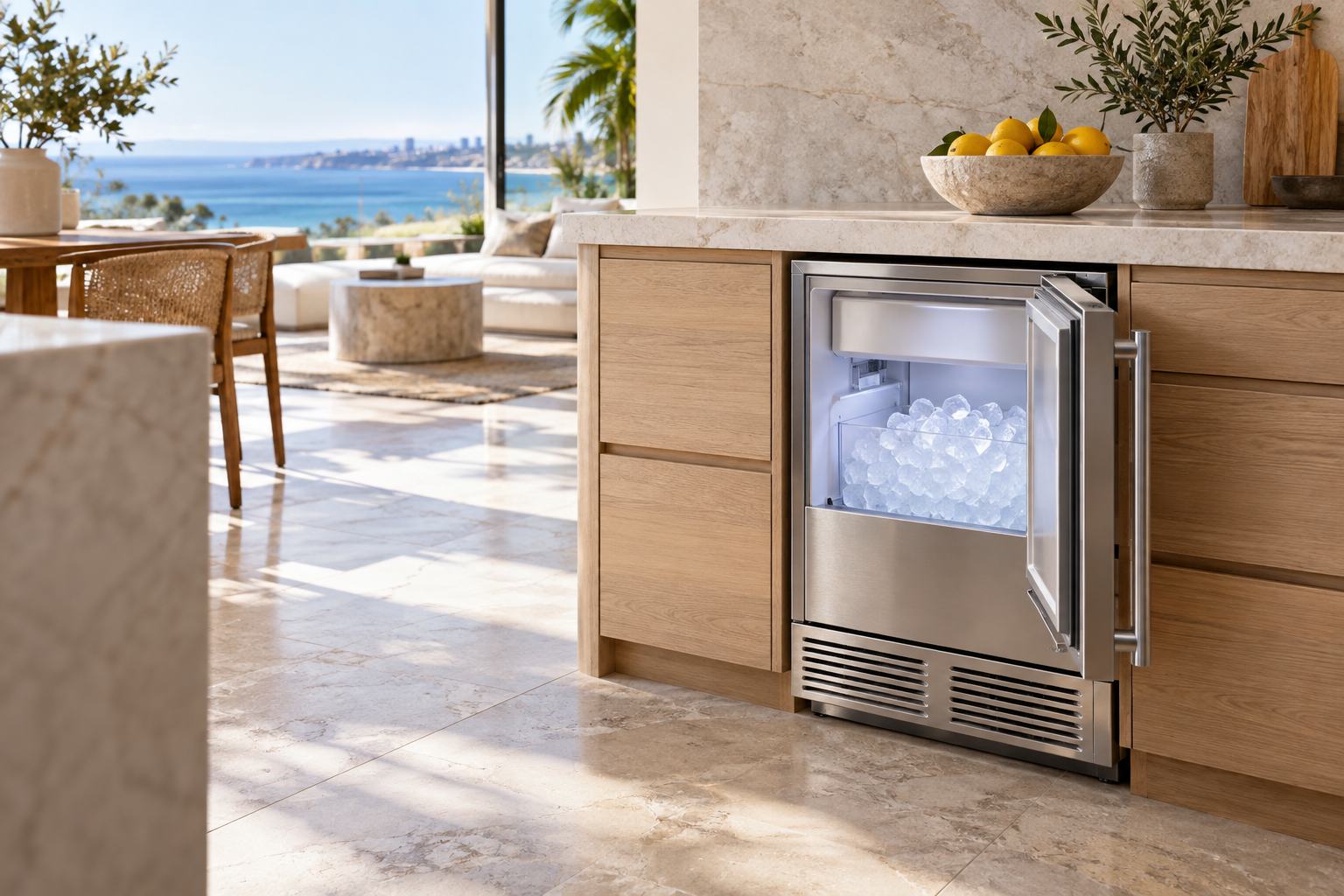
Plain-GE ice means two machines: the UCC15 clear-ice undercounter - a serious little refrigeration plant with a recirculating water system - and the ice makers built into GE refrigerators. Neither publishes fault codes, and GE's own troubleshooting is maintenance-first: the condenser and the water path before anything else.
A photo of the model label and the complete installation helps the team understand the configuration before the visit.
15-inch built-in clear-ice makers - gravity drain or pump-drain configurations.
The 15-inch nugget-ice sibling on the same service footprint.
Door and freezer-section makers inside GE refrigerators - diagnosed through the fridge.
The Opal countertop nugget maker belongs to GE Profile - a separate brand, covered separately.
Start with the symptom
A symptom narrows the inspection; it does not identify the failed component. The $99 visit confirms the actual fault on the exact model before any repair is authorized.
Power, water supply and the harvest cycle - walked in order before refrigeration verdicts.
Water filter age and reservoir hygiene - solved with GE's own cleaning procedure.
Harvest and bin-level sensing - the honest undercounter split.
Drain type matters: gravity installs and pump-drain machines fail differently.
San Diego hard water versus the descale schedule - maintenance that pays for itself.
Fill line, valve and arm position - the classic post-move trio.
Series and model numbers
Undercounter machines are standalone refrigeration appliances; built-in makers are refrigerator subsystems - two different plates, two different parts books, one visit either way.
Model label
On UCC15/UNC15 undercounters the rating plate is behind the kickplate or front service panel - the same panel GE's cleaning procedure opens. For built-in makers, use the refrigerator's plate inside the fresh-food section. Photograph the complete label — the full model and serial identify parts and production year better than the series name alone.
Indicators and alerts
For any message not shown, use the manual for the exact model rather than a generic list.
GE diagnostics
Verified: neither the UCC15/UNC15 undercounters nor GE's built-in refrigerator makers publish fault codes - GE's official material is cleaning and troubleshooting procedure, and this page follows it rather than inventing a table. The Profile-branded Opal is covered under its own brand.
Preventive service and owner care
Alpha Pro provides preventive and general maintenance for GE ice machines. The appliance design determines which procedures are accessible and appropriate.
Owner maintenance
Professional maintenance
A professional visit can evaluate accessible systems without assuming every procedure applies to every model.
Diagnosis before parts
Call or book with the model label, exact behavior, any displayed codes, photos, and access notes.
The technician examines the reported condition in context: production rate, water flow, harvest behavior, drainage, controls, and relevant components.
Findings and proposed work are explained before repair proceeds. The residential diagnostic is credited toward an approved repair.
Service area and operating context
Poway sits in the hills off I-15 - ranch properties of Old Poway, gated Green Valley, newer streets off Espola Road. Garage refrigerators fight summer heat, canyon dust clogs condensers, and hard water leaves scale in ice makers and washer valves.
Inland heat and hard water set the pattern here: garage refrigerators work hardest in summer, dust clogs condensers, and scale builds in ice makers, dishwashers and washer valves.
During maintenance, accessible metal surfaces can be inspected for corrosion, moisture exposure, or conditions that may warrant attention. Location alone does not establish the cause of a failure.
A better repair decision
There is no honest universal age or price threshold. Start with the exact model and a diagnosis.
Local notes · Poway
Poway's hot season runs from about the start of July to late September, and that's when ice gets used most: poolside, on patios and at weekend gatherings. It's also when GE ice makers struggle. A countertop Opal on a warm patio table can't shed heat, and a refrigerator in a hot garage may not keep its freezer cold enough to make ice. The water adds to the load, testing very hard at 236 mg/L. We sort out whether heat, airflow or scale is behind the slowdown.
An ice maker is a small refrigeration system, and it works harder as the air around it warms. Poway's August highs average about 84°F, and a covered patio or closed garage can run hotter still. For a GE Profile Opal, the danger is airflow. GE says the machine needs three inches of clearance at the back and sides, and a crowded outdoor bar or kitchen corner blocks the vents, so the ice comes out slushy and the machine defrosts too often. The Opal Ultra's rear filter picks up dust quickly on trail-side and horse properties. In a garage refrigerator, GE's ice maker needs the freezer cold enough to reach 16°F, and in peak heat an older unit may not get there. The water supply is the other factor. The City of Poway's 2024 report averages 236 mg/L, about 13.8 gpg, which is very hard, and the city notes that calcium leaves white spots on fixtures. The same minerals build up on inlet valve screens and Opal water sensors.
Symptom: Wet, slushy nuggets, warm air from the vents and little ice even though the Bin Full light is on. Cause: Blocked airflow from tight placement or the side tank, made worse by patio heat. Fix: Move the unit into shade with three inches of space at the back and sides, pull the side tank forward and clean the rear filter on Ultra models.
Symptom: Ice stops in July and returns in October. Cause: A hot garage and a dusty condenser keep the freezer from getting cold enough for the ice maker. Fix: We clean the condenser, test the fan and start relay, and check freezer temperature against GE's target.
Symptom: Small cubes, slow refills and a dispenser that sputters. Cause: Very hard city water builds scale on the valve screen and seat, and an overdue filter restricts flow further. Fix: We check supply pressure and the filter first, then replace the scaled valve and confirm a full fill on the next cycle.
Symptom: The Opal runs but won't dispense after a party. Cause: Ice bridging in the chute when nuggets are pulled fast and then left to sit and fuse. Fix: On Dispense models, hold Power and the Dispense button to reverse the auger. On others, power off and let it melt before restarting.
At Poway's hardness, GE's table puts Opal descaling every two to three weeks, and in peak summer use, stick to the short end. Clean the Ultra's rear filter at least every two months, more often if the unit sits near a dusty yard or arena. Keep the garage refrigerator's condenser clean before July, and keep its freezer about three-quarters full so it holds the cold.
Let us know whether the problem is in the kitchen, a garage refrigerator or a countertop unit, and send the model number. For gated properties or long private driveways, give us the gate code and parking instructions. Please keep dogs and horses away from the work area. Find the refrigerator's water shutoff. Our technician measures freezer temperature and supply pressure, checks the condenser and fan, and tests the valve, fill tube and ice maker module before quoting.
If the garage refrigerator's ice maker failed because the freezer ran warm, fix the cooling first. A new ice maker module won't help a freezer that can't reach temperature. Valves and modules are modest parts on a GE refrigerator. For the countertop Opal, GE's warranty is replace or refund, and most summer problems are placement and scale rather than broken parts. Our $99 diagnostic comes off the repair.
Helpful answers
Clear preparation makes a service request easier to evaluate.
Yes - same-day windows are offered across San Diego County subject to the day's schedule. Availability is confirmed for the exact address when you book.
We take requests across Poway (ZIP 92064, 92074). Share gate codes, parking or building access when booking so the technician can plan the visit.
Yes. It is non-refundable and credited toward the total repair cost if you proceed. There are no residential exceptions.
A 90-day labor warranty and a 1-year parts warranty, both starting on the date the repair is completed.
No. A symptom narrows the search, but the diagnostic visit on the exact model confirms the actual fault before any repair is authorized.
No - the UCC15/UNC15 platform signals through behavior, and GE's official troubleshooting is condition-based. Diagnosis is direct: condenser, water path, harvest, sealed system.
The water path is talking: scale on the plate, weak pump flow or low supply. GE's cleaning procedure comes first - most cloudy-ice calls end there.
The Opal is a GE Profile product - a separate brand we service under its own page. This page covers plain-GE undercounters and built-in makers.
GE's own schedule says every 6 to 12 months - more often with pets or a dusty garage. A starved condenser mimics expensive refrigeration failures.
Behind the kickplate or front service panel on undercounters; on the refrigerator's interior plate for built-in makers.
It's built as an indoor countertop appliance. Outdoor heat and direct sun cut production and cause slushy ice. If you use it outside, keep it shaded, give it three inches at the back and sides, and bring it in afterward. Dust and pollen outdoors also mean more filter cleaning.
The freezer can't get cold enough in the heat. GE's ice maker needs the freezer cold enough to reach 16°F, and a hot garage plus a dusty condenser makes that hard. Clean the coil, give it air, and have us test the fan and start parts.
They come from the same thing. The City of Poway says calcium in its water causes white spots and fixture buildup, and those minerals also coat ice maker valves and Opal sensors. That's why descaling on a hard-water schedule matters here.
On Opal Dispense models, hold the Power and Dispense buttons together to reverse the auger and free the jam. On other models, turn the machine off and let the ice melt before restarting. If it jams often, descale it and check that the vents have clearance.
Repair and preventive care
Schedule help for an active problem or arrange preventive maintenance for the appliance.
We are ready to help with your appliance repair needs.
Call Us
(619) 877-6701Visits by appointment
11364 Nawa Way,Business Hours
Email Us
Email us