

KCGS gas cooktops
30 and 36-inch sealed-burner tops with the 17K BTU Professional dual-ring burner and Even-Heat simmer.
KitchenAid service · Poway
Same-day KitchenAid cooktop repair in Poway, Mon–Sat 7 AM–6 PM. $99 service call, credited to the repair. 3-month labor / 1-year parts warranty. Licensed (A51423) and insured up to $1M. Family-owned and run by Viktor, owner and lead technician. Rated 5.0★ from 490 Google reviews. Call (619) 877-6701.
$99 service call, credited · Same-day service Mon–Sat · Approval before work · License A51423 · EPA-certified technicians · Insured up to $1M
The diagnostic fee is non-refundable and credited toward the total repair cost when you proceed.
Commercial service visits are priced separately at $150.
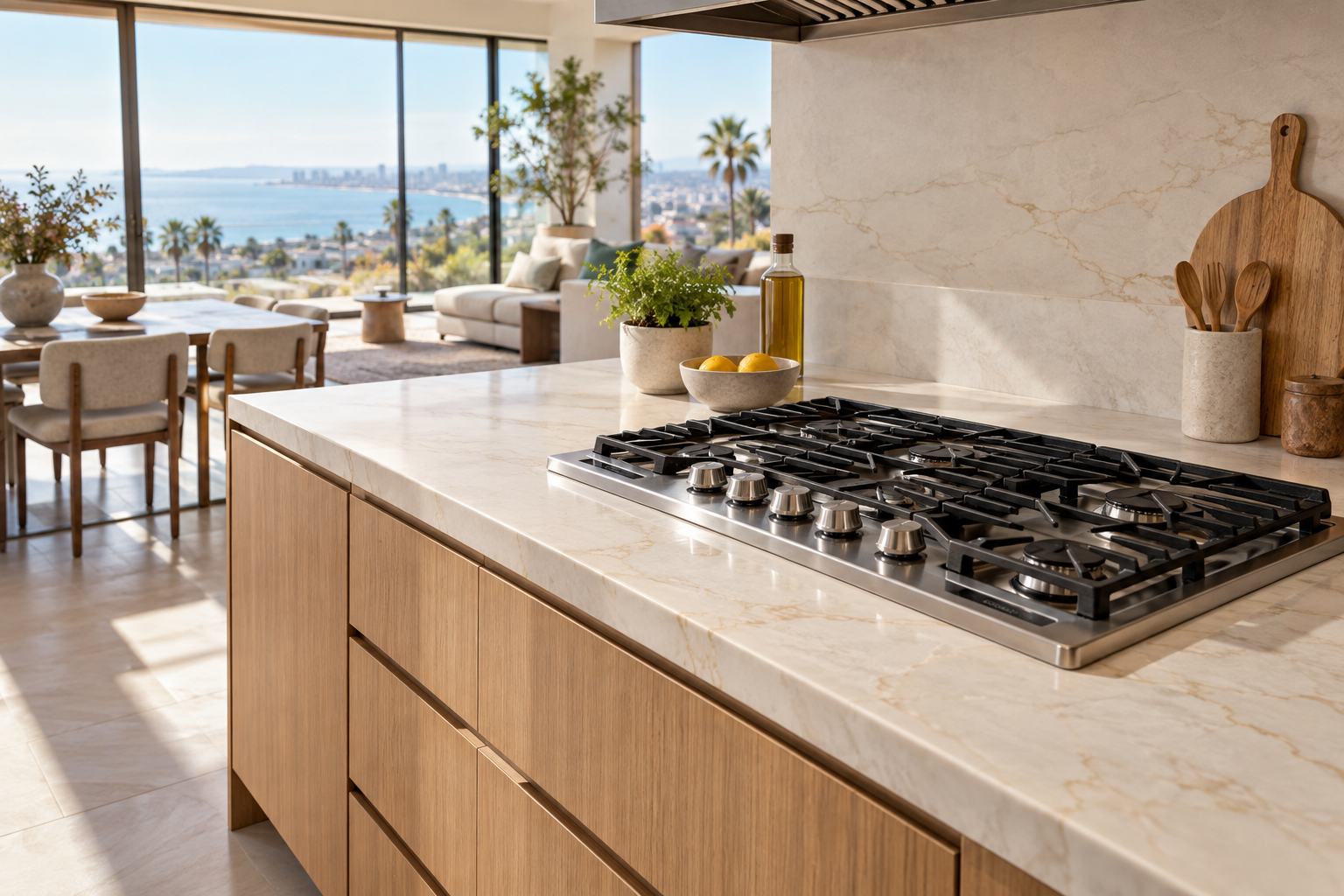
KitchenAid cooktops
KitchenAid cooktops split into two honest worlds: gas and radiant tops that are essentially mechanical, and induction tops whose module electronics speak in F-codes - F47 being the documented one. KitchenAid's own service policy replaces whole induction modules rather than individual boards, which shapes how a repair is quoted.
A photo of the model label and the complete installation helps the team understand the configuration before the visit.
30 and 36-inch sealed-burner tops with the 17K BTU Professional dual-ring burner and Even-Heat simmer.
30 and 36-inch induction tops - the KICU touch-control generation and newer KCIG line.
Even-Heat radiant tops with double- and triple-ring elements.
30-inch electric tops with the integrated retractable downdraft vent.
Start with the symptom
A symptom narrows the inspection; it does not identify the failed component. The $99 visit confirms the actual fault on the exact model before any repair is authorized.
Module communication first - after the breaker reset the boards are tested, not guessed.
Moisture under the caps and electrode condition - dry and reseat before parts.
Spark module, electrode and valve - tested in order.
Pan material and size first, zone electronics second.
Element winding and control switch - direct measurement tells.
The KCED vent motor and its switch are their own circuit - serviced with the top.
Series and model numbers
The prefix decides the diagnosis: KCGS gas is valves and igniters, KICU/KCIG induction is modules and touch controls - two different visits under one brand.
Model label
The model and serial plate is on the underside of the cooktop, reached from the cabinet below; a duplicate rating label ships with the Use and Care Guide. Photograph the full plate before the visit if the underside is accessible. Photograph the complete label — the full model and serial identify parts and production year better than the series name alone.
Indicators and alerts
For any message not shown, use the manual for the exact model rather than a generic list.
KitchenAid diagnostics
F47 is verified against KitchenAid's official Product Help page for electric cooktops. Gas and radiant tops publish no codes, and blog tables inventing them are excluded.
Preventive service and owner care
Alpha Pro provides preventive and general maintenance for KitchenAid cooktops. The appliance design determines which procedures are accessible and appropriate.
Owner maintenance
Professional maintenance
A professional visit can evaluate accessible systems without assuming every procedure applies to every model.
Diagnosis before parts
Call or book with the model label, exact behavior, any displayed codes, photos, and access notes.
The technician examines the reported condition in context: ignition or zone behavior, controls, surfaces, installation, and relevant components.
Findings and proposed work are explained before repair proceeds. The residential diagnostic is credited toward an approved repair.
Service area and operating context
Poway sits in the hills off I-15 - ranch properties of Old Poway, gated Green Valley, newer streets off Espola Road. Garage refrigerators fight summer heat, canyon dust clogs condensers, and hard water leaves scale in ice makers and washer valves.
Inland heat and hard water set the pattern here: garage refrigerators work hardest in summer, dust clogs condensers, and scale builds in ice makers, dishwashers and washer valves.
During maintenance, accessible metal surfaces can be inspected for corrosion, moisture exposure, or conditions that may warrant attention. Location alone does not establish the cause of a failure.
A better repair decision
There is no honest universal age or price threshold. Start with the exact model and a diagnosis.
Local notes · Poway
Heat and dust are the forces that shape cooktop problems in Poway. The hot season runs from about July to late September, when August highs average near 84°F and kitchens get warm. That leaves induction and touch-control tops with less cooling margin. Trail dust, barn dust and pet hair drift into cooling fans, and wildfire smoke has left ash across the city more than once. We repair KitchenAid induction, radiant and gas cooktops in Poway homes, with extra attention to the cooling and ventilation issues inland kitchens face.
An induction cooktop generates heat in the pan, but its power board still runs hot and relies on a fan to pull cabinet air across it. If that air is already warm, or the path is blocked by drawers, a wall oven or stored items, the board overheats and shuts the zone down. Poway kitchens often have large cooktops over drawer banks or ovens, and summer adds heat to that equation. Dust is the next factor. Poway has more than 78 miles of trails where horses have priority, plus the Poway Equestrian Center, and many homes keep dogs. Dust and hair drawn into the cooling fan reduce airflow over time. Wildfire history matters too: large parts of Poway were evacuated during the 2003 Cedar Fire and the 2007 Witch Creek Fire, and smoke events leave fine ash on surfaces and in fans. Poway's housing is mostly single-family homes built from 1970 to 1999, so many kitchens have been remodeled, and cooktops were sometimes fitted into cutouts designed for an older model with different ventilation needs. Gas cooktops in these homes face their own inland issue: dust and insects in burner ports, especially after long trips.
Symptom: A zone turns off mid-cook or shows an overheat indication, most often on hot afternoons. Cause: Blocked cabinet ventilation, a dust-clogged cooling fan or a stressed generator board. Fix: We clean or replace the fan, open up the air path and test the board. If the cutout starves the unit of air, we explain what needs changing.
Symptom: The cooling fan runs loud or rattles, even at low power. Cause: Dust and pet hair packed on the fan blades, or worn fan bearings. Fix: We clean the fan housing and replace the fan motor if bearings are worn. We also check the board heat sink for dust.
Symptom: Clicking but no flame on one or more burners. Cause: Air in the lines after a long break, insects or dust in the ports, or a misaligned cap. Fix: We clear ports, reseat caps and confirm gas flow. If needed, we replace the electrode or spark module.
Symptom: Part of the element glows while the rest stays dark. Cause: A partially failed ribbon element or a loose terminal. Fix: We test the element and its terminals, replace the element and restore clean connections. We also check the switch that feeds it for heat damage before closing up.
Focus on airflow and cleanliness. Before July, clear storage from the cabinet below an induction top and vacuum the vents. After Santa Ana winds or smoke events, clean again. On gas tops, check ports for dust and run each burner briefly after time away. Pet owners should vacuum near vents more often.
Most Poway homes have driveways, so parking is simple. For gated streets or long private drives, share directions and codes. Clear the cabinet under the cooktop before we arrive. Have the model and serial number, the burner or zone that fails, and whether problems happen only when it is hot. That detail helps us separate ventilation issues from failed parts. If you smell gas or hear hissing, leave the house and call SDG&E at 1-800-411-7343 or 9-1-1 from outside before calling us.
Fans, switches, electrodes and radiant elements are usually worth repairing. A failed induction generator board is a bigger expense, and when paired with cracked glass or an older top it can make replacement the better choice. Fixing the ventilation first prevents repeat failures. Our $99 diagnostic is credited toward the repair.
Helpful answers
Clear preparation makes a service request easier to evaluate.
Yes - same-day windows are offered across San Diego County subject to the day's schedule. Availability is confirmed for the exact address when you book.
We take requests across Poway (ZIP 92064, 92074). Share gate codes, parking or building access when booking so the technician can plan the visit.
Yes. It is non-refundable and credited toward the total repair cost if you proceed. There are no residential exceptions.
A 90-day labor warranty and a 1-year parts warranty, both starting on the date the repair is completed.
No. A symptom narrows the search, but the diagnostic visit on the exact model confirms the actual fault before any repair is authorized.
The induction power control and the user interface lost communication - officially a board or wiring fault. Reset at the breaker for one minute; if it returns, the module needs service.
Because KitchenAid's current serviceability policy replaces induction modules as complete units rather than individual power boards - the quote reflects how the part is actually sold.
No - they are mechanical with spark ignition. Diagnosis is direct: electrodes, spark modules, valves and caps.
On the underside of the unit, reached from the cabinet below - with a duplicate rating label supplied with the Use and Care Guide.
Stop using the top first. Glass replacement is quoted honestly against the value of the unit - on induction models the glass and module condition are assessed together.
Its electronics depend on cabinet air to stay cool. In warm kitchens, and with any blockage or dust, the board overheats and the zone shuts down to protect itself. Cleaning the fan and clearing the air path usually fixes it.
Fine dust and hair drawn into the cooling fan reduce airflow. Over time that stresses the fan bearings and the power board. Regular vacuuming of the cabinet vents, and keeping the kitchen door closed on windy days, helps keep the top running normally.
Ash can settle in burner ports and cooling fans. Wipe the surface and vacuum the vents after smoke events. If the cooktop runs noisier than before, a burner flame looks uneven, or a zone cuts out, schedule an inspection.
Run the burner for a few seconds to push air out of the line. Check that the cap is seated and the ports are clear. If it still won't light, call us. If you smell gas at any point, leave and call SDG&E first.
Repair and preventive care
Schedule help for an active problem or arrange preventive maintenance for the appliance.
We are ready to help with your appliance repair needs.
Call Us
(619) 877-6701Visits by appointment
11364 Nawa Way,Business Hours
Email Us
Email us