
C2S950 / C2S900
Gas six-burner tops over electric convection ovens - double-oven and warming-drawer variants.
Cafe service · Poway
Same-day Cafe range repair in Poway, Mon–Sat 7 AM–6 PM. $99 service call, credited to the repair. 3-month labor / 1-year parts warranty. Licensed (A51423) and insured up to $1M. Family-owned and run by Viktor, owner and lead technician. Rated 5.0★ from 490 Google reviews. Call (619) 877-6701.
$99 service call, credited · Same-day service Mon–Sat · Approval before work · License A51423 · EPA-certified technicians · Insured up to $1M
The diagnostic fee is non-refundable and credited toward the total repair cost when you proceed.
Commercial service visits are priced separately at $150.
Cafe ranges
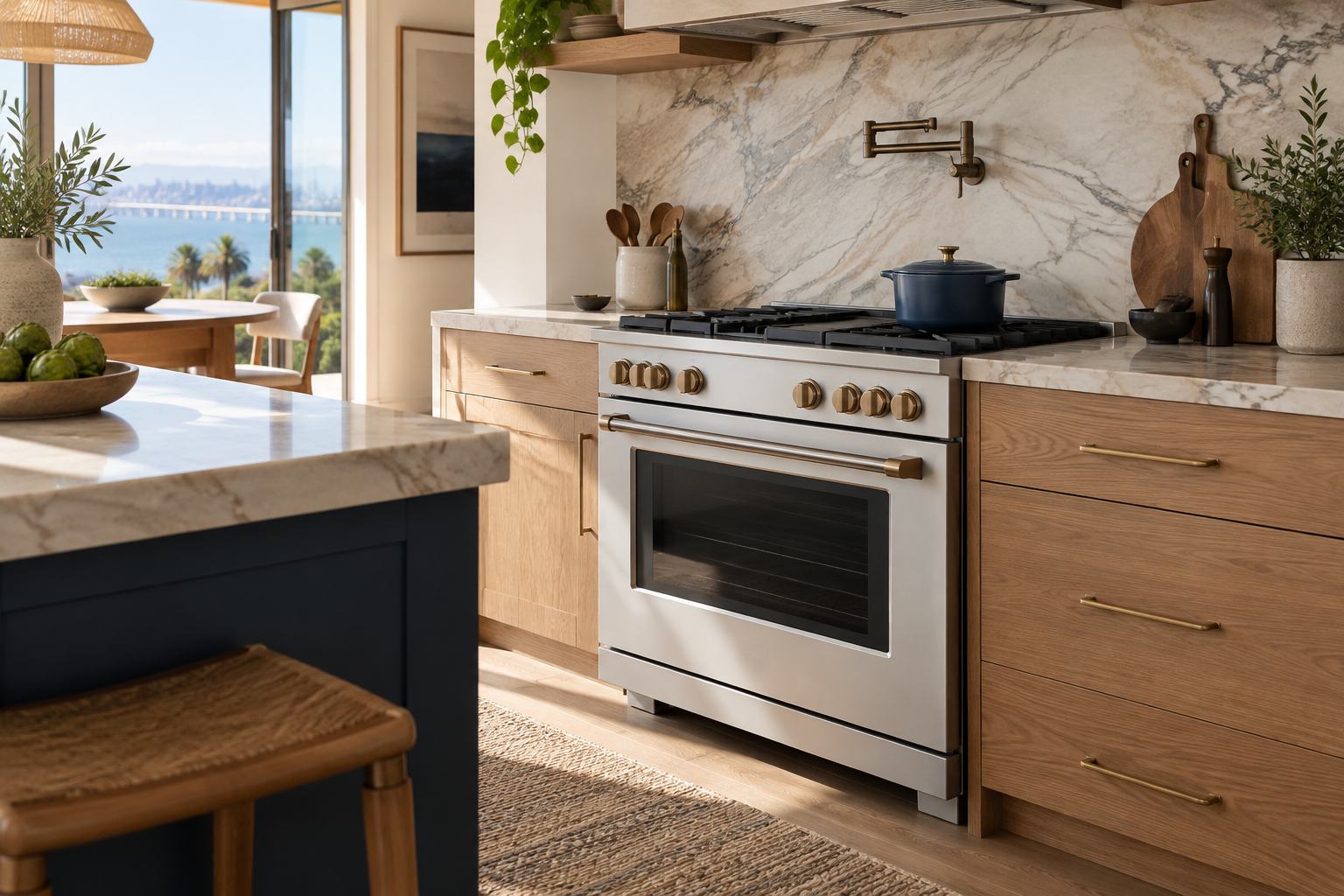
Café ranges are GE's design-forward flagships - the dual-fuel C2S950 with its edge-to-edge six-burner top, the gas CGS750 double-oven, the induction CHS900 family - all reporting through GE's documented F-code system. Over-temperature, sensor, door lock and cooling fan each have a named code, which makes diagnosis on these ranges refreshingly direct.
A photo of the model label and the complete installation helps the team understand the configuration before the visit.
Gas six-burner tops over electric convection ovens - double-oven and warming-drawer variants.
30-inch gas slide-in with six sealed burners, integrated griddle and two ovens.
Induction slide-ins with 11-inch power elements and convection ovens below.
Brushed brass, copper and black knob kits over three finishes.
Start with the symptom
A symptom narrows the inspection; it does not identify the failed component. The $99 visit confirms the actual fault on the exact model before any repair is authorized.
Moisture and cap seating first, then igniter and spark module - the honest order.
The dual-fuel split - element and relay on electric ovens, igniter on gas.
Each cavity diagnosed independently - sensor, element, convection fan.
The integrated griddle's burner and regulation - a known service point.
The E-o pattern and pan detection - covered by the cooktop dialect.
Thermal fuse and door latch - the documented casualty, routinely repaired.
Series and model numbers
The prefix names the fuel mix, and the fuel mix names the diagnosis - while the oven side speaks GE's F-code language on every variant.
Model label
The model and serial plate is behind the storage or warming drawer on the frame, or on the oven frame behind the door - pull the drawer and check the edges. Photograph the full plate. Photograph the complete label — the full model and serial identify parts and production year better than the series name alone.
Indicators and alerts
For any message not shown, use the manual for the exact model rather than a generic list.
Cafe diagnostics
All F-codes and meanings come from GE Appliances' official fault-code documentation shared across GE-family brands including Café. Because meanings shift across control generations, ambiguous codes are verified against the exact model's service data rather than assumed.
Preventive service and owner care
Alpha Pro provides preventive and general maintenance for Cafe ranges. The appliance design determines which procedures are accessible and appropriate.
Owner maintenance
Professional maintenance
A professional visit can evaluate accessible systems without assuming every procedure applies to every model.
Diagnosis before parts
Call or book with the model label, exact behavior, any displayed codes, photos, and access notes.
The technician examines the reported condition in context: ignition, flame quality, temperatures, elements, controls, door fit, and relevant components.
Findings and proposed work are explained before repair proceeds. The residential diagnostic is credited toward an approved repair.
Service area and operating context
Poway sits in the hills off I-15 - ranch properties of Old Poway, gated Green Valley, newer streets off Espola Road. Garage refrigerators fight summer heat, canyon dust clogs condensers, and hard water leaves scale in ice makers and washer valves.
Inland heat and hard water set the pattern here: garage refrigerators work hardest in summer, dust clogs condensers, and scale builds in ice makers, dishwashers and washer valves.
During maintenance, accessible metal surfaces can be inspected for corrosion, moisture exposure, or conditions that may warrant attention. Location alone does not establish the cause of a failure.
A better repair decision
There is no honest universal age or price threshold. Start with the exact model and a diagnosis.
Local notes · Poway
Poway kitchens do a lot of family cooking. Households average 2.9 people, most homes are detached, and many have four or more bedrooms. That means big pots and frequent boil-overs on a Café range. Poway's tap water is very hard, averaging 236 mg/L, and boiled-over water leaves mineral crust on caps and grates. On all-gas Café pro-style ranges, the oven's hot-surface igniter is another common complaint: the oven takes too long to heat, or doesn't light at all. Inland heat and dust complete the picture.
The City of Poway treats mostly imported water at its Berglund plant, and its 2024 report shows an average hardness of 236 mg/L, or about 13.8 grains per gallon. That rates as very hard. When pots boil over, the water evaporates and leaves white mineral scale on burner caps, burner bases and around ports. Scale plus food residue narrows ports and gives an uneven flame. Summer heat is the second factor. The hot season runs roughly July through late September, with August highs around 84 degrees. A kitchen that is already warm makes a long bake cycle harder on the oven's electronics, especially on dual-fuel models with an electronic oven control. Poway's dust is the third factor. Santa Ana winds blow hardest inland from September to April, and horse properties and trails add fine grit indoors. Dust settles into burner ports and around spark electrodes. On the oven side of an all-gas range, the bake burner uses a glow-bar igniter. It must draw enough current to open the gas safety valve. As it ages, it can still glow but draw too little current, so the oven heats slowly or not at all.
Symptom: The igniter glows but the flame takes minutes to appear, or never does. Cause: A weakened hot-surface igniter not drawing enough current to open the oven safety valve. Fix: We measure igniter current and replace the igniter. Gas valve testing is for technicians only.
Symptom: White crust on caps and bases, flame gaps, or burners that won't hold a simmer. Cause: Mineral residue from very hard water boil-overs combined with grease and dust in the ports. Fix: We clean ports and caps, check cap seating and set the low-flame adjustment.
Symptom: F2 after overheating, or F3/F4 with no oven heat. Cause: A stuck relay or a failed temperature sensor, often exposed during long summer bakes. Fix: Test sensor, then control relays; replace the failed part. We confirm the fix with a thermometer.
Symptom: Burner clicks but won't light, or sparks outside the burner. Cause: Dust buildup or a cracked ceramic insulator. Dust holds moisture. Fix: Clean or replace the electrode and check the spark module. A cracked insulator always needs replacement, since it can spark to metal.
A little vinegar goes a long way. Soak crusted burner caps in a vinegar and water mix, rinse, and dry fully before reinstalling. Wipe boil-overs promptly so minerals don't bake on. After windy days, wipe the cooktop and check electrodes. If the oven starts taking longer to preheat, note how long; that helps us judge the igniter. If you smell gas, leave the home and call SDG&E from outside. Never use steel wool on the burner heads. Grates can soak too.
Most Poway homes have driveways and easy access. If you're on a rural or equestrian property, share gate details and where to park away from animals or trailers. Have the model and serial ready, usually behind the storage drawer or oven door, and tell us whether the range is all-gas or dual-fuel. Note which burner or oven function fails and how long the oven takes to preheat. A video of the igniter glowing helps. Please clear the cooktop before we arrive.
Igniters, electrodes, burner cleaning and sensors are among the most economical repairs a range needs. Relay or control faults on dual-fuel models cost more but are usually still worth repairing. Replacement is worth discussing when major electronics fail on an older unit. The $99 diagnostic is credited toward the repair. We quote before any work starts, so the decision stays yours.
Helpful answers
Clear preparation makes a service request easier to evaluate.
Yes - same-day windows are offered across San Diego County subject to the day's schedule. Availability is confirmed for the exact address when you book.
We take requests across Poway (ZIP 92064, 92074). Share gate codes, parking or building access when booking so the technician can plan the visit.
Yes. It is non-refundable and credited toward the total repair cost if you proceed. There are no residential exceptions.
A 90-day labor warranty and a 1-year parts warranty, both starting on the date the repair is completed.
No. A symptom narrows the search, but the diagnostic visit on the exact model confirms the actual fault before any repair is authorized.
Officially: oven temperature exceeded a preset threshold. It is a safety condition - stop using the oven, cut power at the breaker, and have the sensor and relay measured before the next bake.
That is the dual-fuel split: the gas top and electric oven are separate systems. The oven side - element, relay, sensor, control - is diagnosed on its own.
More burners, same principles - igniters, spark module and valves, each testable. The edge-to-edge top comes off with the documented procedure.
Behind the storage or warming drawer on the frame, or on the oven frame behind the door. Photograph the full plate with the suffix.
Yes - the induction top speaks GE's documented flash dialect and the oven speaks F-codes; both halves get instrument diagnosis.
The safety valve won't open unless the igniter draws enough current, so gas shouldn't flow. The igniter is likely weak and needs replacement. If you smell gas, turn the oven off, leave the home and call SDG&E. Don't keep retrying the oven.
Yes. Soak removable caps in diluted white vinegar, rinse, and dry fully. Don't soak igniters or electrodes. Make sure caps sit flat afterward, since a misaligned cap causes uneven flames and clicking. Avoid harsh abrasives on the finish. Scrub gently.
A warm kitchen shouldn't slow preheat much. A noticeably longer preheat usually points to a weak igniter on gas models or an element issue on dual-fuel models. Time it and let us know when you book. The number of minutes is useful.
Yes. We cover all of Poway, including rural and equestrian properties. Let us know about gates, long drives or animals before the visit. We also cover Old Poway and Rancho Arbolitos, and we're happy to schedule around feeding or riding times.
Repair and preventive care
Schedule help for an active problem or arrange preventive maintenance for the appliance.
We are ready to help with your appliance repair needs.
Call Us
(619) 877-6701Visits by appointment
11364 Nawa Way,Business Hours
Email Us
Email us